
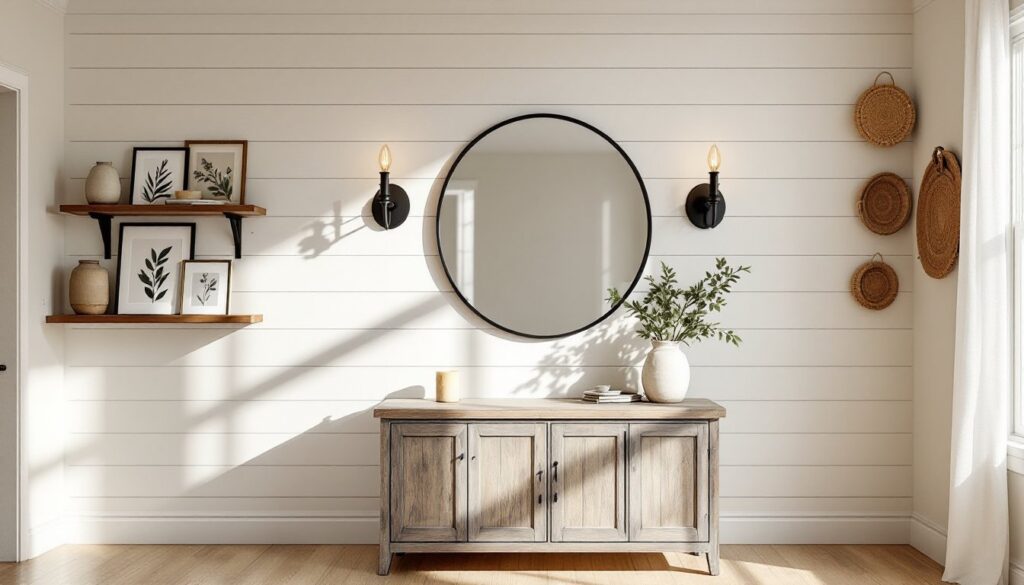
Modern farmhouse style walks the line between cozy and clean, blending rustic textures with streamlined silhouettes. Nowhere is this balance more visible than on dining room walls, where the right decor can anchor the entire space. Whether someone’s working with a blank slate or refreshing tired walls, thoughtful wall treatments turn a functional eating area into a gathering spot with character. The key lies in layering natural materials, vintage-inspired pieces, and practical elements that feel intentional, not cluttered. This guide breaks down seven design approaches that deliver authentic modern farmhouse appeal without the guesswork.
Key Takeaways
- Modern farmhouse dining room wall decor balances rustic textures with clean lines by layering natural materials, vintage pieces, and functional elements without clutter.
- Shiplap and wood accents anchor the farmhouse aesthetic, with nickel-gap boards offering an easier installation alternative and costs ranging from $2–$5 per square foot.
- Oversized vintage signs and typography art should measure at least 24×36 inches and be mounted to studs for safe installation and proper visual impact.
- Gallery walls work best when mixing frame finishes (weathered wood, matte black metal, brass) with 2–3 inches of spacing and hung 57–60 inches from the floor in dining spaces.
- Statement mirrors and metallic accents amplify light and expand tight spaces, but require heavy-duty mounting into studs to support 30+ pound pieces safely.
- Open shelving, botanical displays, and functional elements like plate racks and mug rails complete the modern farmhouse style by adding texture while maintaining authentic, collected-over-time appeal.
Shiplap and Wood Accents That Define Modern Farmhouse Style
Shiplap remains the hallmark of farmhouse aesthetics, and for good reason. The horizontal line pattern creates visual width in narrow dining rooms while adding depth that flat drywall can’t match. True shiplap features rabbeted edges that overlap, though many DIYers now use nickel-gap boards (1×6 or 1×8 pine with intentional spacing) for easier installation and a cleaner look.
Installation requires finding studs and using a brad nailer or construction adhesive. Most builders space boards with nickel coins as spacers, hence the name. Paint in warm whites like Benjamin Moore’s Simply White or leave raw for a reclaimed look, though unsealed wood will show water marks and fingerprints in high-traffic zones.
Alternatives include reclaimed barn wood applied vertically for height emphasis, or board-and-batten treatments that combine wide boards with narrow vertical battens. Board-and-batten works especially well below a chair rail, paired with painted drywall above. Expect to pay $2–$5 per square foot for pine materials, more for reclaimed or hardwoods. Always acclimate lumber indoors for 48 hours before installation to prevent seasonal gaps.
Vintage-Inspired Signs and Typography Art
Oversized vintage signs inject personality without permanent commitment. Authentic enamel or tin advertising signs from flea markets carry patina and history, though reproductions offer consistent sizing and safer mounting.
Look for pieces measuring at least 24×36 inches for dining room scale, anything smaller reads as décor clutter rather than statement art. Mount directly to studs using appropriate anchors: a 10-pound metal sign needs more than a picture hook. Placement matters: center signs over sideboards or buffets, or hang off-center on a large wall balanced by shelving or a mirror on the opposite side.
Typography prints referencing recipes, family mottos, or farm imagery suit the style when framed in chunky wood or matte black metal. Canvas wraps tend to feel too polished for authentic farmhouse vibes. DIYers with basic carpentry skills can build simple plank-backed signs using 1×6 pine, wood stain, and vinyl stencils or hand-painted lettering. Seal with matte polyurethane to prevent chipping. The appeal lies in imperfection, slightly uneven spacing and visible wood grain read as handmade, not mass-produced.
Gallery Walls with Mixed Frames and Rustic Touches
A well-planned gallery wall solves the “too small, too scattered” problem that plagues many dining rooms. The modern farmhouse version mixes frame finishes, weathered wood, matte black metal, and raw brass, rather than matching sets.
Start by arranging pieces on the floor in the intended layout. Aim for 2–3 inches of spacing between frames for cohesion without crowding. Include varying depths: shadow boxes, flat frames, and small floating shelves holding candles or greenery. Content should balance personal photos, botanical prints, black-and-white landscapes, and one or two three-dimensional objects like small wreaths or vintage tools.
Use a laser level to establish a horizontal center line, then work outward. Picture-hanging strips work for frames under 5 pounds: anything heavier needs wall anchors rated for the weight. Adhesive strips leave zero holes but can fail in humidity or on textured walls.
Common mistake: hanging everything at eye level in a sitting room. In dining spaces where people stand more often, the gallery center should sit around 57–60 inches from the floor. Keep the outer perimeter roughly rectangular or grid-based, organic, scattered arrangements look unfinished against farmhouse’s structured aesthetic.
Statement Mirrors and Metallic Accents
Large mirrors amplify natural light and visually expand tight dining areas, making them both decorative and functional. Round mirrors in iron or rope frames soften the hard lines of rectangular tables, while arched window-pane mirrors reference old barn architecture.
Size matters: a mirror over a buffet should span roughly two-thirds the furniture width to feel anchored. Mirrors hung on open walls can go larger, 48 to 60 inches in diameter for rooms with 9-foot ceilings. Always mount into studs or use heavy-duty toggle anchors: a 30-pound mirror will tear straight through drywall.
Metallic accents warm farmhouse’s neutral palette. Aged brass sconces flanking a mirror add task lighting for serving areas, while wrought iron candle holders or wall-mounted lanterns introduce shadow play. Matte black finishes feel modern: brushed nickel skews traditional.
Skip ultra-shiny chrome or polished finishes, they clash with farmhouse’s lived-in vibe. Wire-brushed or hammered textures integrate better. For renters or commitment-phobes, lean an oversized floor mirror against the wall rather than mounting it. Just secure the top with furniture straps to prevent tipping.
Natural Elements and Botanical Displays
Bringing the outdoors in anchors modern farmhouse in its agrarian roots. Dried botanicals, eucalyptus, cotton stems, pampas grass, arranged in galvanized buckets or ceramic crocks soften hard walls without wilting. Mount floating shelves (1×6 or 1×8 boards on hidden brackets) to rotate seasonal displays.
Shelf depth matters: 8-inch-deep shelves accommodate dinner plates stood on edge: 6-inch depths suit vases and smaller items. Install brackets into studs spaced 16 or 24 inches on center for load-bearing support. Expect each bracket to hold 15–30 pounds depending on type.
Pressed botanical prints in simple wood frames suit walls adjacent to windows, where natural light highlights detail. Real pressed flowers under glass need UV-protective glazing to prevent fading, standard glass won’t cut it. Alternatively, high-quality reproductions printed on cotton rag paper offer the look without fragility.
Woven baskets mounted as wall sculptures add texture and dimension. Secure with plate hangers or adhesive disc hangers rated for the basket weight. Group in odd numbers (3 or 5) and vary sizes for visual interest. Avoid perfectly matched sets, farmhouse thrives on collected-over-time authenticity.
Open Shelving and Functional Wall Decor
Open shelving blurs the line between storage and display, a hallmark of farmhouse pragmatism. Install two to three horizontal shelves staggered at different heights rather than uniform spacing, it feels less institutional.
Use 2×8 or 2×10 lumber for substantial presence. Stain in natural tones or paint to match trim. Iron pipe brackets or heavy-duty L-brackets in matte black provide industrial contrast. Each shelf should hit studs at minimum two points: distribute weight by placing heavier items (serving platters, crock collections) directly over brackets.
Style shelves with everyday items: stacked ironstone plates, linen napkins in wire baskets, glassware with visible contents. Mix in non-functional pieces like small plants, candles, or a vintage scale. Leave some breathing room, shelves crammed full read as storage desperation, not curated design.
Plate racks and mug rails turn dishware into art. Wooden plate racks suit walls above buffets: install with a slight backward tilt (about 5 degrees) so plates lean securely. Cup hooks under floating shelves or mounted to dedicated rails keep mugs accessible while freeing cabinet space. Choose oil-rubbed bronze or aged brass hooks to tie into other metallic accents.
Conclusion
Modern farmhouse dining room walls succeed when they balance texture, function, and restraint. The best spaces layer wood tones, metal finishes, and organic elements without tipping into theme-park territory. Start with one anchor piece, shiplap, a statement mirror, or open shelving, then build around it. And remember: farmhouse style rewards patience. Collected pieces with actual stories behind them always outshine a cart full of mass-market “rustic” décor bought in one afternoon.