
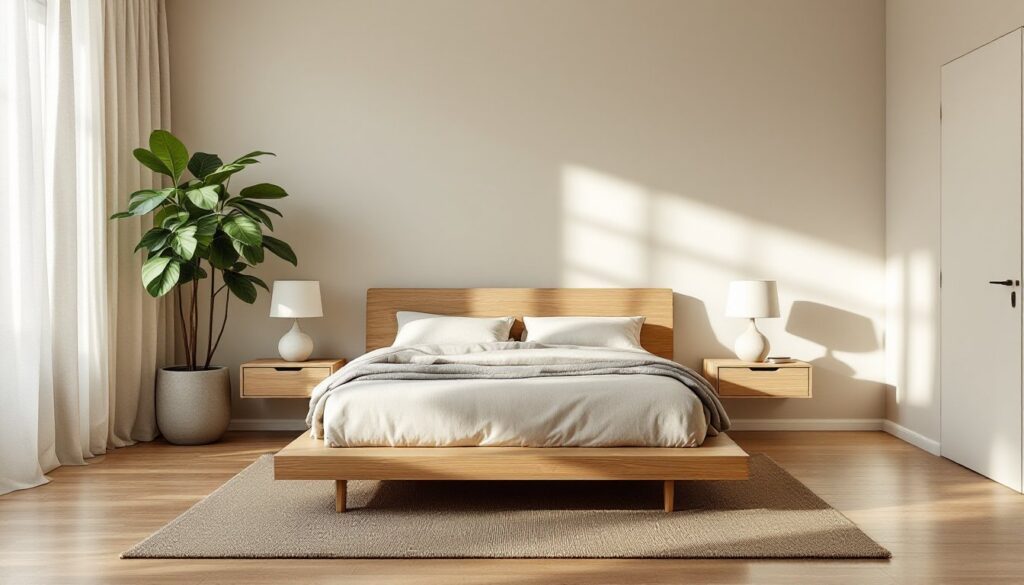
A minimalist bedroom doesn’t mean sacrificing comfort or warmth, it’s about creating a space where every element serves a purpose and nothing feels excessive. Unlike trend-driven decorating that requires constant updates, minimalist design focuses on quality over quantity, clean geometry, and thoughtful curation. The result is a room that promotes better sleep, reduces visual stress, and stays easy to maintain. Homeowners who commit to minimalist principles often find that less truly becomes more, fewer items mean fewer decisions, less cleaning, and a bedroom that feels more like a retreat than a storage unit with a bed in it.
Key Takeaways
- Minimalist bedroom decor prioritizes intentionality and function, ensuring every piece earns its place while reducing visual stress and improving sleep quality.
- A neutral color palette of whites, warm grays, and soft beiges forms the foundation of minimalist bedrooms, making small spaces feel larger and easier to maintain.
- Functional storage solutions like under-bed bins, floating nightstands, and closed wardrobes keep clutter hidden and surfaces clear without sacrificing accessibility.
- Quality furniture with clean lines, solid wood construction, and minimal ornamentation lasts longer and maintains the minimalist aesthetic better than mass-market alternatives.
- Layering natural textures—linen, wool, cotton, and wood—adds warmth and depth to minimalist spaces without introducing visual clutter or overwhelming patterns.
- Thoughtful lighting with dimmer switches and 2700–3000K warm bulbs, combined with simple window treatments and a single potted plant, prevents minimalist bedrooms from feeling sterile or cold.
What Defines Minimalist Bedroom Design?
Minimalist bedroom design centers on three core principles: intentionality, restraint, and function. Every piece in the room should earn its place, either by serving a practical need or contributing meaningfully to the aesthetic. This isn’t about emptying a room down to bare walls, it’s about editing ruthlessly and keeping only what adds value.
Key characteristics include clean horizontal and vertical lines, neutral or monochromatic color schemes, and an absence of visual clutter. Surfaces stay clear. Decor items are few but deliberate. Furniture serves double duty when possible, a bed frame with integrated storage, a bench that holds extra blankets, or a nightstand with concealed compartments.
Minimalism also means respecting negative space. Empty wall area and open floor space aren’t voids to fill, they’re breathing room that makes the bedroom feel larger and more serene. Builders and designers often reference the 60-30-10 rule for proportions: 60% of the room in a dominant neutral, 30% in a secondary tone, and 10% in accent details. In minimalist spaces, those accents are kept subtle and sparse.
Choose a Calming Neutral Color Palette
Neutral doesn’t mean boring, it means building a foundation that won’t compete for attention. Whites, warm grays, soft beiges, and muted taupes form the backbone of minimalist bedrooms. These tones reflect light evenly, make small rooms feel larger, and pair well with natural materials like wood, linen, and stone.
When selecting paint, consider sheen carefully. Eggshell or matte finishes (25–35% gloss) minimize light reflection and hide minor wall imperfections better than satin or semi-gloss. For a true minimalist look, match trim and walls in the same color to eliminate visual breaks. A gallon of quality interior paint typically covers 350–400 square feet per coat: most bedrooms need two coats for even coverage.
Layering neutrals adds depth without introducing chaos. Pair cool-toned grays with warm linen bedding, or offset stark white walls with a charcoal wool throw. Avoid high-contrast patterns, think tonal variation instead. If the room needs warmth, lean toward greiges (gray-beige hybrids) or soft ivories. Cooler climates often benefit from warmer neutrals, while sun-drenched southern exposures can handle cooler grays without feeling sterile.
Sample coordination: Pair Benjamin Moore’s Simply White (OC-117) on walls with natural oak flooring and pale gray bedding for a Scandinavian-inspired minimalist palette.
Declutter and Embrace Functional Storage Solutions
Clutter is the antithesis of minimalism. Before buying new furniture or decor, edit what’s already in the bedroom. Remove items that don’t serve sleep, relaxation, or essential daily routines. Books, electronics, and hobby supplies belong elsewhere, bedrooms should support rest, not multitasking.
Once the edit is complete, invest in closed storage that hides what remains. Floating nightstands with drawers keep surfaces clear. Under-bed storage bins (look for low-profile options, typically 5–6 inches high) use dead space without requiring additional floor area. Built-in closets with floor-to-ceiling doors eliminate visual noise: if building custom, use 3/4-inch plywood or MDF for shelving, spaced 12–16 inches apart for folded clothes.
For renters or those avoiding permanent installs, freestanding wardrobes in solid wood or powder-coated steel maintain minimalist aesthetics better than particleboard units. Choose designs with flat door fronts, no ornate molding or glass inserts. If open shelving is unavoidable, limit it to one wall and keep items uniform in color and size.
Tool note: Installing closet systems usually requires a drill/driver, level, stud finder, and sometimes a circular saw for trimming shelves. Locate wall studs (typically spaced 16 inches on center) before mounting heavy shelving to avoid relying solely on drywall anchors.
Select Quality Furniture with Clean Lines
Minimalist bedrooms demand fewer pieces, so each one should be well-made and visually quiet. Look for furniture with straight edges, flush surfaces, and minimal ornamentation. Platform beds work especially well, they sit low to the ground, often incorporate storage, and eliminate the need for a box spring.
When choosing a bed frame, solid wood (oak, walnut, maple) or welded steel frames outlast veneered particleboard and maintain their appearance longer. Check joinery: mortise-and-tenon or dowel joints hold up better than staples or cam locks. Frame weight is a decent proxy for quality, lightweight frames often use thinner materials that warp or wobble over time.
Nightstand height should align roughly with the top of the mattress (typically 24–28 inches, depending on mattress thickness). Match materials across furniture pieces for visual cohesion, but don’t feel obligated to buy matching sets, mixing a walnut bed frame with white oak nightstands can add subtle interest without breaking minimalist principles.
Avoid furniture with excess detailing: skip tufted headboards, decorative turned legs, or ornate drawer pulls. Opt for recessed pulls or push-latch drawers instead. If budget allows, consider custom or semi-custom pieces from local woodworkers, they’re often better constructed than mass-market options and can be built to exact dimensions for awkward spaces.
Layer Textures for Warmth and Depth
Minimalist bedrooms can feel cold if texture gets neglected. Since color and pattern are restrained, tactile variety becomes critical. Layering different materials, linen, wool, cotton, wood, metal, adds richness without visual clutter.
Start with natural fiber bedding: linen duvet covers and cotton percale sheets breathe well and soften with age. Add a chunky knit throw in merino wool or cotton for weight and visual interest. A jute or sisal area rug anchors the bed and introduces organic texture underfoot: these natural fiber rugs typically measure 1/4 to 1/2 inch thick and work best over hardwood or low-pile carpet.
Window treatments should be simple but substantial. Linen or cotton canvas curtains in floor-to-ceiling panels create clean vertical lines and improve acoustics. Mount rods as close to the ceiling as possible and extend them 6–12 inches beyond the window frame on each side, curtains that barely cover the glass look skimpy and break the minimalist line.
Incorporate wood tones through furniture, picture frames, or a simple floating shelf. Mixing wood species is fine, but keep finishes consistent, either all natural/oiled or all stained. Metal accents (drawer pulls, light fixtures, curtain rods) should match: stick with brushed nickel, matte black, or brass throughout the room, not a mix of all three.
Incorporate Intentional Lighting and Natural Elements
Lighting in a minimalist bedroom should be layered and adjustable. Overhead fixtures provide general illumination, but bedside lamps or wall-mounted sconces allow for task lighting and ambiance. Choose fixtures with simple geometric forms, spheres, cylinders, or linear designs in metal or ceramic.
Dimmer switches (standard residential dimmers cost $15–$40 and install in about 20 minutes with a screwdriver and wire stripper) give control over brightness and mood. For bedside reading, aim for 40–60 watts equivalent in LED bulbs with a color temperature around 2700–3000K for warm white light. Avoid cool daylight bulbs (5000K+) in bedrooms, they suppress melatonin and interfere with sleep.
Natural elements ground minimalist spaces and prevent them from feeling sterile. A single large plant, a fiddle leaf fig, snake plant, or rubber tree, adds life without requiring a jungle of pots. Choose simple ceramic or concrete planters in neutral tones. If natural light is limited, low-light tolerant varieties like pothos or ZZ plants thrive with minimal sun.
Maximize daylight by keeping window treatments simple and operable. Roller shades in linen or light-filtering fabric provide privacy without blocking morning light. If blackout capability is needed for shift workers or light-sensitive sleepers, cellular (honeycomb) shades offer insulation and room-darkening in a clean profile.
Safety note: When installing wall-mounted fixtures, turn off power at the breaker, confirm wires are dead with a non-contact voltage tester, and follow NEC guidelines for junction box support, luminaires over 6 pounds require boxes rated for the fixture weight.
Conclusion
Creating a minimalist bedroom isn’t about deprivation, it’s about building a space that supports rest and eliminates distractions. By focusing on quality materials, functional storage, and intentional design choices, homeowners can achieve a bedroom that feels both serene and livable. Start with decluttering, invest in well-made furniture with clean lines, and layer textures to keep the room from feeling sterile. The result is a sanctuary that requires less maintenance and delivers more peace.