
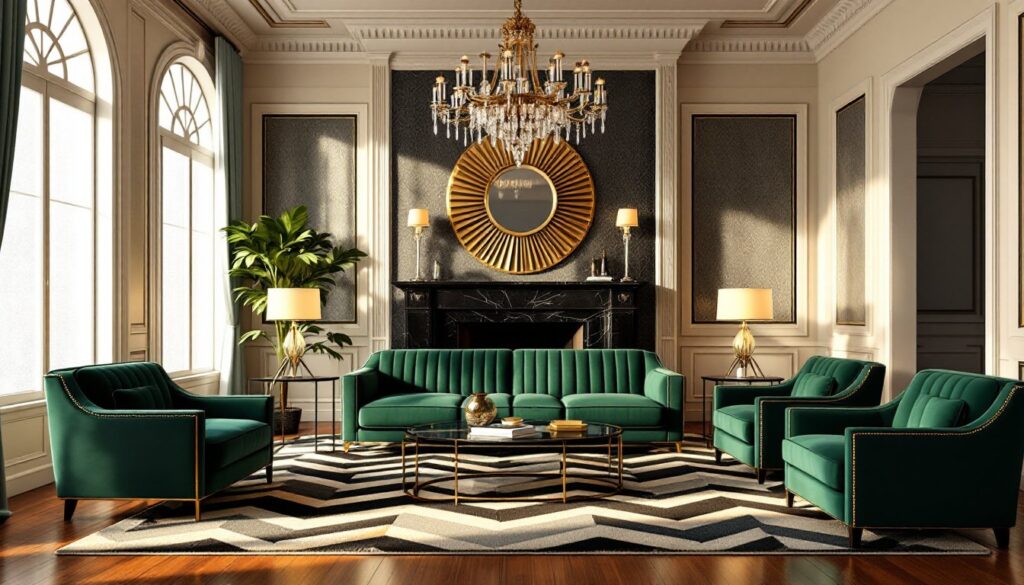
Art Deco isn’t just a design style, it’s architectural theater. Born in 1920s Paris and perfected in Jazz Age America, this movement married industrial precision with unapologetic luxury. Chrome met marble, geometry met opulence, and the result still turns heads a century later. Unlike minimalist trends that strip rooms bare, Art Deco layers bold patterns, metallic finishes, and sculptural forms into spaces that feel both glamorous and livable. Homeowners looking to inject drama without sacrificing function will find Art Deco offers a rare balance: it’s showy enough to impress but grounded in craftsmanship and symmetry.
Key Takeaways
- Art Deco interior design balances bold glamour with functional craftsmanship by combining clean lines, metallic finishes, and geometric patterns that feel both luxurious and livable.
- Master the essential color palettes: pair high-contrast black-and-white foundations with gold or chrome accents, or layer jewel tones like navy and emerald with metallic finishes for warmth and sophistication.
- Geometric patterns are Art Deco’s backbone—prioritize chevrons, hexagons, and sunburst motifs in crisp, symmetrical repeats across wallpaper, rugs, and tile to anchor the style.
- Invest in luxurious materials like exotic wood veneers, polished marble, velvet upholstery, and prominent metal hardware; authentic Art Deco demands tactile richness and gleaming surfaces over synthetic substitutes.
- Create impact with statement furniture featuring waterfall edges, stepped silhouettes, and sculptural lighting like sunburst mirrors and tiered chandeliers that emphasize symmetry and vertical lines.
- Commit fully to the style in one room at a time—half-measures and cheap finishes undermine Art Deco’s confident glamour, so start with one signature element and layer complementary pieces deliberately.
What Defines Art Deco Interior Design?
Art Deco emerged between the two World Wars as a rejection of ornate Victorian excess and the stark simplicity of early modernism. It split the difference: clean lines with decorative punch, machine-age materials with handcrafted details.
The style revolves around symmetry and stepped forms, think skyscraper silhouettes translated into furniture and molding profiles. Vertical lines dominate, often emphasized by fluted columns, tall mirrors, or striped wallpaper that draws the eye upward. Sunburst motifs, zigzags, chevrons, and stylized florals appear throughout, usually rendered in high contrast.
Materials telegraph luxury: lacquered wood, polished chrome, brass, glass block, and exotic veneers like zebrawood or burl walnut. Inlays, mother-of-pearl, ivory alternatives, or contrasting woods, add visual interest without cluttering the silhouette. Surfaces should gleam. Matte finishes rarely appear in authentic Art Deco spaces.
Unlike Art Nouveau’s organic curves, Art Deco favors angular geometry inspired by Cubism, Egyptian archaeology (post-Tutankhamun), and the streamlined forms of ocean liners and locomotives. It’s a style that celebrates progress and prosperity, which is why it still resonates in upscale hotels, theaters, and urban residences.
Essential Color Palettes for Art Deco Interiors
Art Deco color schemes fall into two camps: high-contrast dramatic or muted metallics with jewel tones.
The classic approach pairs black and white or black and cream as a foundation, then punctuates with gold, silver, or chrome accents. Picture glossy black lacquered cabinets against white marble tile, trimmed in polished brass. This palette works especially well in kitchens, bathrooms, and entryways where durable surfaces matter.
For spaces demanding warmth, designers layer navy, emerald, or sapphire with gold or bronze. A navy velvet sofa with gold nailhead trim against cream walls captures the look without feeling like a museum replica. Deep burgundy, forest green, and charcoal also fit, especially in dining rooms or libraries.
Metallic finishes aren’t optional, they’re structural. Brushed brass, polished chrome, antiqued bronze, and mirrored surfaces reflect light and amplify the sense of glamour. Even a single mirror with a sunburst frame or a chrome floor lamp can anchor a room’s Art Deco credentials.
Pastels occasionally appear, blush pink, powder blue, soft coral, but only when balanced with geometric patterns or metallic trim to avoid veering into shabby chic territory. The goal is sophistication, not sweetness.
Geometric Patterns and Bold Shapes
Geometry is Art Deco’s backbone. Patterns should be crisp, repetitive, and symmetrical, not organic or hand-drawn.
Chevrons and zigzags work well on rugs, wallpaper, or tile borders. A black-and-white chevron runner in a hallway instantly signals the style. Hexagons and octagons appear in floor tile layouts, especially effective in entryways or powder rooms using contrasting marble or porcelain.
Greek key borders (meander patterns) frame doorways, mirrors, or area rugs. They’re subtle enough for smaller doses but recognizable. Fan or shell motifs, scalloped, radiating from a central point, show up in cabinet doors, headboard upholstery, or stenciled wall treatments.
When selecting wallpaper, look for large-scale repeats with metallic inks. Small, busy patterns dilute the impact. A silver-on-charcoal geometric print behind a bar cart or in a powder room makes a statement without overwhelming square footage.
Mirrors amplify geometry. Beveled, etched, or antiqued mirror panels in stepped or trapezoidal shapes can clad an entire accent wall (common in 1930s cinema lobbies) or frame a fireplace. Frameless mirrors with geometric etching keep sightlines clean while adding pattern.
Avoid mixing too many geometric styles in one room. Pick one dominant motif, chevron, hexagon, or sunburst, and let it repeat across textiles, hardware, and accessories.
Luxurious Materials That Capture the Art Deco Spirit
Art Deco demands tactile richness. Budget constraints are real, but the style falls flat with purely synthetic or flimsy substitutes.
Exotic wood veneers, walnut burl, mahogany, rosewood, or zebrawood, define cabinetry and furniture. Solid exotic hardwoods are cost-prohibitive for most DIYers, but high-quality veneers over plywood offer the look at a fraction of the price. Apply high-gloss lacquer or polyurethane (three to five coats, sanded between applications) for that signature glassy finish.
Stone and tile: Marble remains the gold standard, particularly in black, white, or green varieties. Terrazzo, a composite of marble chips in cement or resin, also fits the period and costs less than slab marble. For backsplashes or accent walls, consider glass tile in subway or stacked layouts with metallic grout.
Metals should be prominent. Polished brass hardware, chrome plumbing fixtures, brushed nickel cabinet pulls, or antiqued bronze light fixtures all work. Mixing metals is acceptable if they’re distributed evenly, chrome faucets and brass drawer pulls can coexist if each appears in multiple locations.
Velvet, silk, and satin bring textile luxury. A velvet sofa or satin drapes add softness without sacrificing formality. Leather, especially in tufted or channel-stitched styles, suits seating and upholstered headboards.
Glass block or ribbed glass fits the industrial-meets-elegant ethos. Use it for interior windows, shower enclosures, or room dividers. Frosted or fluted glass cabinet doors keep contents obscured while diffusing light.
Be honest about your skill level: lacquering and stone work often require professional installation or refinishing to avoid a DIY disaster.
Statement Furniture and Lighting Fixtures
Art Deco furniture emphasizes low profiles, streamlined curves, and geometric frames. Pieces should feel substantial but not bulky.
Look for waterfall edges on dressers and nightstands, where the wood grain flows over the top and down the front in a continuous curve. Stepped or tiered silhouettes echo skyscraper setbacks. A console table with mirrored panels and brass trim, or a sideboard with inlaid wood and chrome handles, anchors a dining or living room.
Upholstered pieces often feature channel tufting, curved backs, or wingback profiles. Club chairs with rolled arms in navy velvet or emerald leather fit the look. Avoid overstuffed cushions, Art Deco seating has tailored, firm lines.
Lighting is sculptural, not just functional. Tiered chandeliers with frosted glass shades, chrome sconces with geometric backplates, or tripod floor lamps with milk glass globes all work. Look for fixtures with clean metallic frames and diffused light sources, no exposed Edison bulbs or rustic finishes.
Sunburst mirrors are Art Deco shorthand. A gold or brass sunburst mirror above a mantel or console table delivers instant impact. Pair it with symmetrical sconces on either side to reinforce the style’s love of balance.
When shopping vintage or reproduction, prioritize quality joinery and finish. Poorly executed knock-offs cheapen the entire room. Better to invest in one authentic piece, a refinished vanity or a vintage bar cart, than fill the space with flimsy replicas.
Art Deco Design Ideas for Every Room
Living Room: Start with a bold area rug, geometric pattern, high contrast, and build around it. Position a low-profile sofa in velvet or leather, flanked by chrome or glass side tables. Hang a large sunburst mirror or a tiered chandelier as the focal point. Add tall, fluted floor lamps for symmetry.
Bedroom: A tall upholstered headboard with channel tufting or scalloped detailing sets the tone. Flank it with matching nightstands in lacquered wood or mirrored finishes. Use a black-and-white geometric duvet or bedspread, and hang chrome or brass sconces for bedside lighting. A full-length mirror with a stepped or trapezoidal frame completes the look.
Kitchen: Install glass-front upper cabinets with geometric mullion patterns. Use black or white subway tile with contrasting grout, or opt for hexagon floor tiles in a checkerboard layout. Choose polished chrome or brass faucets and cabinet pulls. A pendant light with a frosted glass shade over an island or breakfast nook ties it together.
Bathroom: Art Deco shines in bathrooms. Use black-and-white floor tile in a geometric pattern, hexagons, diamonds, or basket weave. Install a pedestal sink with chrome fixtures, or a vanity with waterfall edges in dark wood. Frame the mirror with backlit glass or chrome sconces. Glass block or ribbed glass shower enclosures add period-correct privacy.
Entryway: Maximize impact with a bold floor, terrazzo, hexagon tile, or a runner with chevron stripes. A console table with mirrored panels and a sunburst mirror above welcomes guests. Keep clutter minimal: Art Deco thrives on clean sightlines.
Conclusion
Art Deco rewards commitment. Half-measures, cheap finishes, clashing patterns, or timid color, undermine the style’s confident glamour. Start with one signature element, a lacquered sideboard, a geometric rug, a tiered chandelier, and layer in complementary pieces that respect symmetry and craftsmanship. The result isn’t a museum recreation: it’s a home that borrows the best of the Jazz Age without the dust.