
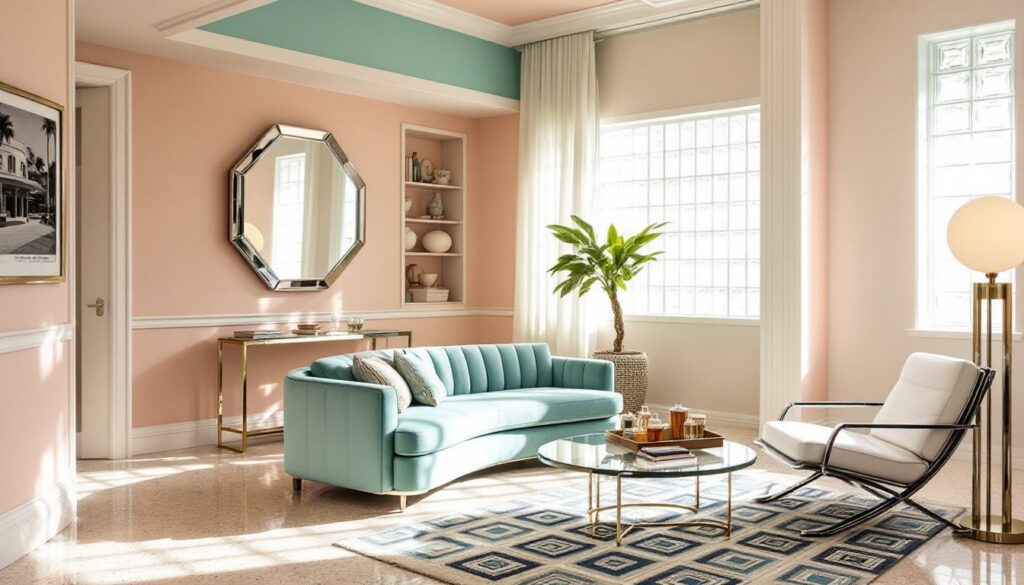
Miami Art Deco isn’t just about pastel buildings on Ocean Drive, it’s a bold, sun-soaked style that translates beautifully indoors. Born in the 1930s and 1940s along South Beach, this design movement blends geometric precision with tropical ease, chrome with coral pink, and Old Hollywood glamour with coastal living. Unlike the cooler, more industrial Art Deco found in New York or Paris, Miami’s version swaps dark woods and heavy velvets for terrazzo floors, glass block, and breezy color schemes. For homeowners looking to capture that vintage Florida vibe without turning their living room into a museum piece, understanding the core elements, and how to adapt them, makes all the difference.
Key Takeaways
- Miami Art Deco interior design distinguishes itself from traditional Art Deco through tropical color palettes, terrazzo flooring, and light-reflecting materials suited to Florida’s climate and sun-soaked aesthetic.
- Essential color schemes for Miami Art Deco include the Pastel Miami Vice trio (soft pink, aqua blue, pale yellow), ocean-inspired turquoise and seafoam, or sunset glamour with coral and peach, always paired with white or cream as a neutral anchor.
- Key furniture elements feature low-profile seating with rounded arms, waterfall edges on tables, bleached wood or blond veneers, and chrome tube frames that balance geometric precision with comfort.
- Incorporate geometric patterns through chevron tile borders, sunburst mirrors, terrazzo flooring ($15-$30 per sq ft), or budget-friendly alternatives like encaustic cement tiles ($8-$15 per sq ft) to create visual rhythm.
- Start a Miami Art Deco interior transformation with high-impact, lower-commitment changes like painting an accent wall, swapping light fixtures, adding a sunburst mirror, or replacing hardware with polished chrome designs.
- Avoid mixing Miami Art Deco with farmhouse or bohemian styles, overdoing pastels in small spaces, and using ultra-modern minimalist furniture that conflicts with the style’s streamlined, warm glamour.
What Makes Miami Art Deco Interior Design Unique?
Miami Art Deco stands apart from traditional Art Deco through its tropical adaptation and coastal sensibility. While classic Art Deco emphasizes luxury materials like ebony and marble, Miami’s version incorporates lighter, more climate-appropriate choices.
The style emerged during South Beach’s building boom between 1923 and 1943, when architects redesigned the streamlined moderne aesthetic for Florida’s heat and humidity. Porthole windows, nautical railings, and eyebrow overhangs became signature exterior features, while interiors emphasized cross-ventilation and surfaces that could withstand salt air.
Key distinguishing features include:
- Tropical color schemes instead of the typical black, gold, and silver palette
- Terrazzo flooring with colorful chips rather than dark hardwoods
- Chrome and glass fixtures that reflect light and resist corrosion
- Streamlined, horizontal lines that mimic ocean liners and speed
- Curved corners and rounded furniture softening the geometric rigor
The style also incorporates flamingo, palm, and sunburst motifs, decorative elements rarely seen in northern Art Deco buildings. These playful touches balanced the movement’s geometric severity with Florida’s leisure culture, creating interiors that felt both sophisticated and vacation-ready.
Essential Color Palettes for Miami Art Deco Interiors
Color separates Miami Art Deco from its moody Manhattan cousin. The palette draws directly from the South Florida landscape, ocean blues, sunset corals, and that particular shade of pink that only exists on vintage hotels.
Primary palette options:
- Pastel Miami Vice trio: soft pink, aqua blue, and pale yellow (often paired with white or cream)
- Ocean-inspired scheme: turquoise, seafoam green, and sandy beige with navy accents
- Sunset glamour: coral, peach, and lavender with chrome or gold metallics
For walls, consider flat or eggshell finishes in lighter tones to maximize natural light, gloss was typically reserved for trim and accent details. A gallon of quality interior paint covers roughly 350-400 square feet, so budget accordingly for larger rooms.
Accent colors include:
- Chrome yellow for small furniture pieces or lighting fixtures
- Flamingo pink used sparingly in textiles or art
- Deep teal or navy as grounding elements in rugs or upholstery
The key is restraint. Pick two to three colors maximum and let white or cream serve as the neutral anchor. Too many pastels create a nursery effect: too much saturation overwhelms the streamlined aesthetic. Metallic accents, particularly brushed chrome, polished nickel, or champagne gold, add the essential Art Deco glamour without competing with the color story.
Key Furniture and Decor Elements
Miami Art Deco furniture balances geometric form with comfort, favoring clean lines over ornate carving. The style evolved during the shift from handcrafted to industrial production, so pieces often feature machine-made precision rather than artisan details.
Essential furniture characteristics:
- Low-profile seating with rounded arms and backs
- Waterfall edges on dressers and tables (curved front edges that “fall” toward the floor)
- Lacquered finishes in white, cream, or pale wood tones
- Mirrored or glass-topped tables that reflect light
- Channel-tufted upholstery in leather or velvet
Look for pieces in bleached woods or blond veneers, maple, birch, or ash, rather than the dark walnut common in earlier Art Deco. Chrome tube frames on chairs and barstools add the industrial edge the style requires.
Decor elements that complete the look:
- Geometric mirrors with stepped or sunburst frames
- Frosted glass light fixtures in globe or cylinder shapes
- Etched or beveled mirrors with tropical or nautical motifs
- Lacquered trays and barware for that cocktail-hour vibe
- Vintage travel posters or black-and-white photography from 1930s-40s Miami
Scale matters. Miami Art Deco rooms aren’t cluttered, each piece should have visual breathing room. If working with vintage furniture, check joints and veneer condition carefully. Repairs to lacquered surfaces require professional refinishing: DIY touch-ups rarely match the original sheen.
Geometric Patterns and Architectural Details
Geometry drives Miami Art Deco, from zigzag moldings to stepped wall recesses. These patterns show up in everything from floor tiles to fabric choices, creating visual rhythm throughout the space.
Common geometric motifs:
- Chevrons and zigzags in tile borders or textiles
- Sunbursts and radiating lines (symbolizing optimism and the Florida sun)
- Stepped or tiered shapes echoing skyscraper setbacks
- Overlapping circles and ovals creating movement
- Stylized fan or shell patterns (the “palmette” motif)
For floors, terrazzo is the authentic choice, a composite material of marble, quartz, or glass chips set in cement or epoxy resin, then polished smooth. Installation requires a professional and runs $15-$30 per square foot installed, depending on chip size and pattern complexity. Regional pricing varies, and decorative borders increase costs.
If terrazzo isn’t in the budget, consider these alternatives:
- Encaustic cement tiles with geometric patterns ($8-$15 per square foot)
- Luxury vinyl tile (LVT) in Art Deco-inspired patterns ($3-$7 per square foot)
- Painted concrete floors with stenciled geometric borders (DIY-friendly)
Architectural details to add or preserve:
- Rounded interior corners where walls meet (requires drywall skill or a pro)
- Horizontal band molding (typically 1×2 or 1×3 nominal lumber, actual ¾” x 1½” or ¾” x 2½”)
- Glass block windows or room dividers (standard blocks are 6″x6″x3″ or 8″x8″x3″)
- Chrome or brass handrails with geometric brackets
Installing glass block is a weekend project for confident DIYers but requires mortar mixing, proper spacing, and reinforcement rods every third or fourth course. Wear safety glasses and work gloves, glass edges are sharp even on finished blocks.
Materials and Finishes That Define the Style
Material choices in Miami Art Deco prioritize light reflection, durability in humidity, and a machine-age aesthetic. The style celebrates industrial materials repurposed for residential elegance.
Signature materials:
- Terrazzo: polished stone composite used for floors, countertops, and even wall panels
- Chrome-plated steel: for furniture frames, light fixtures, and hardware
- Glass: in block, etched, frosted, and mirrored forms
- Lacquer: high-gloss finishes on wood furniture, typically in white or pastels
- Vitrolite (structural glass): opaque colored glass panels used for walls and backsplashes (rare now, but laminated glass or back-painted glass offers a similar look)
Flooring options:
Beyond terrazzo, wide-plank light oak or maple works if kept natural or lightly stained. Avoid distressed or hand-scraped finishes, the period favored machine precision. For kitchens and baths, large-format white subway tiles (3″x6″ or 4″x8″) with black grout provide clean contrast.
Wall treatments:
- Smooth plaster painted in matte or low-sheen finishes
- Horizontal wood paneling in light tones (¼” plywood or MDF, actual thickness)
- Venetian plaster for subtle texture and sheen (requires skilled application)
- Wallpaper with geometric or tropical patterns (use vinyl-coated for humidity resistance in Florida climates)
Hardware and fixtures:
Replace dated hardware with polished chrome, brushed nickel, or unlacquered brass (which develops patina over time). Hinges, drawer pulls, and door handles should feature geometric shapes, circles, rectangles, stepped designs, not traditional ornate styles. For lighting, seek out frosted globe pendants, stepped cylinder sconces, or chrome swing-arm lamps. Many reproduction fixtures capture the look without the vintage wiring concerns.
How to Incorporate Miami Art Deco Into Modern Homes
Full period restoration isn’t practical, or desirable, for most homeowners. The goal is capturing the spirit without sacrificing modern comfort or turning the house into a theme park.
Start with these high-impact, lower-commitment changes:
- Paint: Choose one or two signature Miami Deco colors for an accent wall or entire room. Pair with crisp white trim.
- Lighting: Swap builder-grade fixtures for Art Deco-inspired pendants or sconces. A single statement chandelier can set the tone for an entire space.
- Mirrors: Add a large geometric or sunburst mirror as a focal point. Mirrors amplify light, key in the style.
- Hardware: Replace cabinet pulls, door handles, and light switches with chrome or geometric designs.
- Textiles: Introduce geometric patterns through throw pillows, area rugs, or window treatments.
For deeper renovations:
- Kitchen: Install a terrazzo-look quartz countertop (more durable and lower maintenance than real terrazzo), white subway tile backsplash, and chrome fixtures. Use flat-panel cabinet doors in white or cream lacquer.
- Bathroom: Add glass block as a shower wall (improves privacy while letting in light), install a pedestal sink with chrome legs, and use large-format white tiles with colored grout accents.
- Living areas: Paint one wall in soft aqua or coral, add horizontal band molding at picture-rail height, and round interior corners where walls meet (requires a drywall contractor for best results).
What to avoid:
- Mixing Art Deco with farmhouse, bohemian, or heavily rustic styles, the clash is jarring
- Overdoing the pastels in small spaces (they can feel claustrophobic)
- Using ultra-modern minimalist furniture: it reads cold rather than streamlined
A second set of eyes helps. Have someone review paint samples in different lighting before committing to a full room. Art Deco colors shift dramatically from morning to evening light.
Conclusion
Miami Art Deco brings warmth, personality, and a sense of occasion to interiors without demanding a gut renovation. Start small, swap fixtures, add a bold mirror, paint an accent wall, and build from there. The style rewards attention to detail and restraint, but it’s forgiving enough for DIYers willing to measure twice and embrace a little vintage glamour.