
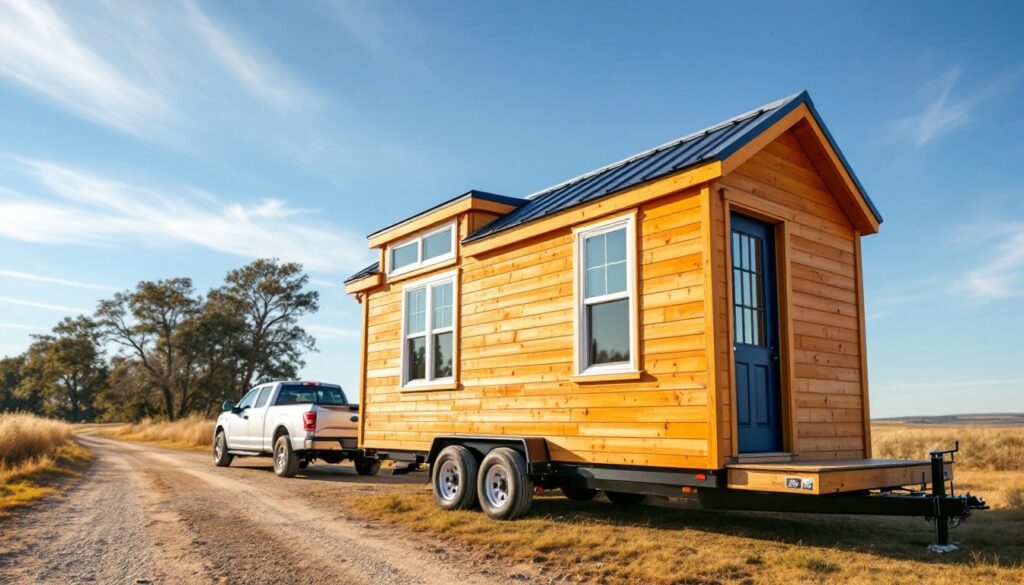
Mobile tiny homes offer a compelling alternative to conventional housing, blending minimalist living with the freedom to relocate. Unlike stationary dwellings, these compact structures sit on trailers or chassis, allowing owners to move whenever the opportunity, or the mood, strikes. They’ve surged in popularity as housing costs climb and remote work untethers people from fixed locations. But diving into mobile tiny home living requires more than enthusiasm. Prospective owners need to understand the build types, legal landscape, realistic costs, and zoning hurdles. This guide walks through the essentials, equipping readers with the practical knowledge to decide if life on wheels fits their plans.
Key Takeaways
- Mobile tiny homes on trailers typically range from 100 to 400 square feet and can be relocated without selling property, offering financial flexibility and freedom compared to traditional housing.
- Three main types—Tiny Houses on Wheels (THOWs), converted RVs, and skoolies—vary in cost and construction time, with DIY builds ranging from $30,000 to $60,000 and professional models from $70,000 to $140,000.
- Zoning regulations remain the biggest obstacle, as most municipalities don’t clearly classify mobile tiny homes, requiring owners to research local ordinances and identify legal parking options before purchasing.
- Off-grid systems and mini-split heat pumps make mobile tiny homes more energy-efficient than conventional homes, though storage limitations and challenging resale markets present significant trade-offs.
- Specialty insurance policies and highway regulations for towing—including oversize permits costing $2 to $5 per mile—add hidden costs that prospective owners must factor into their budget.
What Are Mobile Tiny Homes?
A mobile tiny home is a compact dwelling built on a trailer chassis or wheeled platform, typically ranging from 100 to 400 square feet. The mobility separates them from stationary tiny houses on permanent foundations. Most are towable using a pickup truck with sufficient towing capacity, often a three-quarter-ton or one-ton model, depending on the home’s weight.
Construction methods vary. Some use light-frame wood construction similar to conventional homes, with 2×4 or 2×6 wall studs, while others employ structural insulated panels (SIPs) for better insulation and faster assembly. The trailer itself must meet road-legal weight limits, which vary by state but commonly cap at 13,500 pounds gross vehicle weight rating (GVWR) without requiring commercial licensing.
Mobile tiny homes differ from RVs in building standards. Many follow IRC Appendix Q guidelines for tiny houses, though compliance isn’t universal since zoning codes often don’t classify them neatly. Unlike RVs built to RVIA standards, tiny homes on wheels (THOWs) often lack the RVIA certification needed for some RV parks, creating a legal gray area.
Utilities typically run on a mix of grid hookups and off-grid systems. Owners can connect to standard RV-style 30-amp or 50-amp electrical service, municipal water via garden hose fittings, and sewer through a 3-inch black water drain. Off-grid setups might include solar panels, composting toilets, and rainwater catchment, though these add complexity and upfront cost.
Why Choose a Mobile Tiny Home Over Traditional Housing?
The primary draw is financial flexibility. Mobile tiny homes eliminate or drastically reduce mortgage debt, property taxes, and maintenance costs tied to larger houses. Owners can relocate without selling and buying into new markets, a significant advantage when job opportunities or personal circumstances shift.
Mobility itself appeals to digital nomads, retirees, and anyone prioritizing experiences over permanence. A mobile tiny home can follow seasonal work, let owners escape harsh winters, or simply provide a change of scenery without the logistical nightmare of traditional moving. This portability does require access to land or RV parks, which isn’t always straightforward.
Environmental impact shrinks with square footage. Smaller spaces demand less energy for heating and cooling, many mobile tiny homes use mini-split heat pumps rated for small zones, consuming a fraction of what a conventional HVAC system pulls. Reduced material use during construction also lowers the carbon footprint, though transportation fuel costs can offset some gains if owners move frequently.
There are trade-offs. Storage is tight, forcing ruthless decluttering. Entertaining guests becomes complicated when the entire living area fits in most people’s primary bedroom. Zoning restrictions often prohibit parking a tiny home on residential lots, and finding legal spots can be a persistent headache. Resale markets remain less established than for traditional homes or RVs, potentially limiting exit options.
For those willing to navigate the constraints, mobile tiny homes offer a blend of affordability, freedom, and intentional living that conventional housing rarely matches.
Types of Mobile Tiny Homes
Tiny Houses on Wheels (THOWs)
THOWs represent the most recognized category. These custom-built structures sit on flatbed or gooseneck trailers, designed specifically for residential use. Builders frame them with standard dimensional lumber, 2x4s for walls, 2x6s or engineered joists for floors, and finish interiors much like conventional homes, with drywall, hardwood, or vinyl plank flooring, and full kitchens.
Typical trailer sizes include 20-foot, 24-foot, and 28-foot lengths, with 8.5-foot widths to stay within highway limits without an oversize permit. Going longer or wider triggers special hauling requirements and escort vehicles in many states. Gooseneck trailers allow for raised loft spaces over the hitch, adding headroom and usable square footage compared to bumper-pull designs.
THOWs often incorporate residential-grade appliances, standard ranges, refrigerators, and even tankless water heaters, rather than RV-specific models. This improves durability and functionality but adds weight. Builders must carefully calculate loads to avoid exceeding the trailer’s capacity, factoring in everything from cabinetry to roofing materials.
Construction costs for a professionally built THOW range from $50,000 to $120,000, depending on finishes, size, and whether the buyer provides the trailer. DIY builds can cut costs significantly, though they demand carpentry skills, tool access, and months of focused work.
Converted RVs and Skoolies
Converted RVs start as travel trailers, fifth wheels, or motorhomes, then undergo gut renovations to suit personal tastes. Owners strip out dated interiors, upgrade insulation, install better windows, and reconfigure layouts. This approach offers a head start, the shell, wheels, and basic systems already exist, but older RVs often need extensive electrical and plumbing overhauls.
Skoolies, converted school buses, have become a popular DIY platform. A used bus costs $3,000 to $10,000, providing a steel chassis, large interior volume, and quirky aesthetic. Conversions involve removing seats, reinforcing floors, framing walls with 1×2 or 2×2 furring strips to save weight, and running new wiring compliant with NEC standards for mobile dwellings.
Insulation is critical in both RVs and skoolies. Original RV insulation is minimal, and bus walls are bare metal. Owners typically add spray foam or rigid foam board insulation (R-13 to R-19 in walls, R-30 in ceilings) to make the space livable year-round. Moisture barriers and proper ventilation prevent condensation issues common in mobile structures.
Converted rigs often lack the polish of THOWs but offer lower entry costs and faster timelines. A motivated builder can complete a skoolie in three to six months, compared to a year or more for a ground-up tiny house build.
How Much Do Mobile Tiny Homes Cost?
Total costs break into several categories: the trailer, materials, labor, and systems.
Trailer foundations run $4,500 to $8,000 for a new dual-axle flatbed rated for tiny home loads. Gooseneck trailers add another $1,000 to $2,000. Used trailers can cut costs but require thorough inspection, check for frame rust, bearing wear, and proper tongue weight ratings.
Material costs for a DIY build average $20,000 to $40,000 for a basic 200-square-foot home. This includes framing lumber, sheathing, roofing (metal roofing is popular for durability and light weight), windows, doors, insulation, drywall, flooring, and exterior siding. Upgraded finishes, butcher block counters, subway tile backsplashes, cedar tongue-and-groove ceilings, push costs higher.
Labor is the wild card. Professional builders charge $80,000 to $150,000 for turnkey THOWs, reflecting skilled carpentry, code-compliant electrical and plumbing, and finish quality. DIY builders save on labor but invest hundreds of hours. A realistic timeline for a first-time builder is 1,000 to 1,500 hours.
Systems and utilities add another layer:
- Electrical: Wiring, breaker panel, outlets, and fixtures run $1,500 to $3,000. Off-grid solar systems with batteries cost $5,000 to $12,000 depending on capacity.
- Plumbing: PEX piping, fixtures, a tankless water heater, and a gray/black water system total $2,000 to $4,000.
- Heating/Cooling: Mini-split systems cost $1,200 to $2,500 installed. Propane heaters are cheaper upfront but require ongoing fuel costs.
Permitting and certification fees vary. Some jurisdictions require building permits for THOWs (around $500 to $1,500), though enforcement is inconsistent. RVIA certification for RV classification costs several thousand dollars and requires factory inspection, which most DIY builders skip.
All-in, a DIY mobile tiny home typically costs $30,000 to $60,000, while a professionally built model ranges from $70,000 to $140,000. These figures don’t include land rental or RV park fees, which run $300 to $800 per month depending on location and amenities.
Legal Considerations and Zoning Laws for Mobile Tiny Homes
Zoning is the biggest practical obstacle. Most municipalities classify mobile tiny homes as either RVs or permanent dwellings, and neither category fits cleanly.
If classified as an RV, the home can legally park in RV parks or on private property zoned for recreational vehicles, but many cities ban RVs as primary residences. Enforcement varies, some areas look the other way: others issue fines and eviction notices. RVIA certification helps in RV parks that require it, but THOWs rarely meet RVIA standards without significant design compromises.
If classified as a dwelling, local codes may require permanent foundations, minimum square footage (often 600+ square feet), and utility hookups that exceed what a mobile home provides. Some progressive jurisdictions have created tiny house appendices to zoning codes, allowing THOWs in accessory dwelling unit (ADU) zones or designated tiny home communities. States like Oregon, California, and Colorado have led this shift, but coverage remains patchy.
Building codes add another layer. Mobile tiny homes that follow IRC Appendix Q meet most residential safety standards, but inspections are rare since the structure moves. Electrical work should comply with NEC Article 551 (for RVs) or standard residential codes, depending on classification. Plumbing must handle road vibration, use flexible PEX tubing rather than rigid copper.
Insurance is tricky. Standard homeowners policies don’t cover mobile structures, and RV insurance may not apply to non-RVIA-certified homes. Specialty insurers offer tiny home policies covering liability, structure, and contents, typically costing $600 to $1,200 annually.
Highway regulations govern towing. Homes over 8.5 feet wide or 13.5 feet tall require oversize permits and professional hauling, often costing $2 to $5 per mile. Owners should ensure their truck’s towing capacity exceeds the home’s loaded weight by at least 20% for safe handling.
Before building or buying, research local ordinances, contact the zoning office, and identify legal parking options. Some owners join tiny home communities with shared infrastructure and clear legal standing, while others negotiate private land leases. The regulatory landscape is evolving, but due diligence remains essential to avoid costly surprises.