
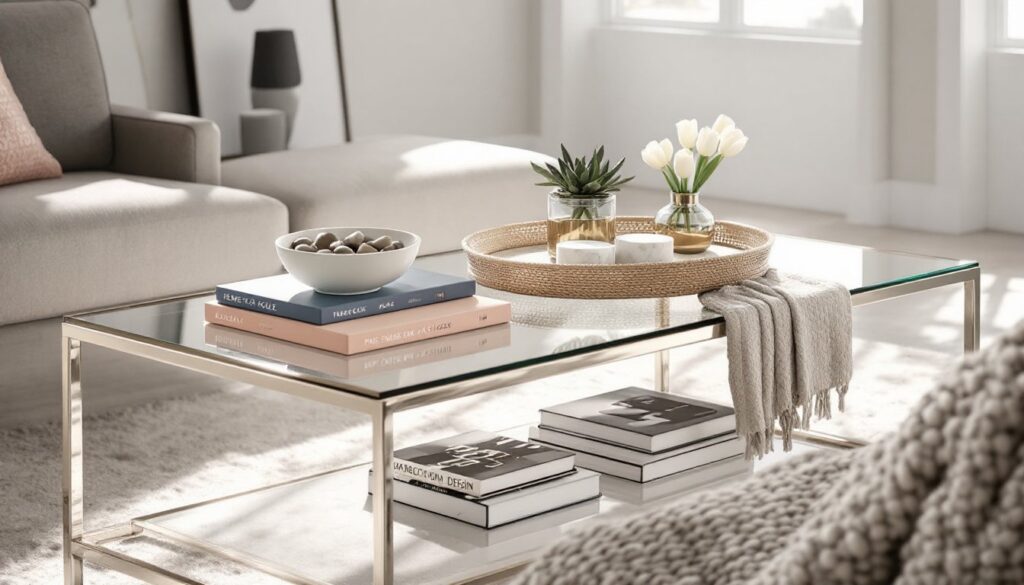
Glass coffee tables offer a unique advantage in home decor: they don’t visually crowd a room. The transparent surface creates an open, airy feel while providing a prime opportunity to showcase thoughtful styling. Unlike wood or metal tables that can dominate a space, glass acts as a neutral backdrop that highlights whatever sits on top. The trick is knowing how to style that surface without creating clutter or visual chaos. Smart decor choices can transform a bare glass tabletop into a curated focal point that ties the entire living room together, whether the goal is modern minimalism, cozy layering, or something in between.
Key Takeaways
- Glass coffee table decor ideas should leverage the transparent surface to create visual depth and an airy feel while revealing what’s underneath, from decorative rugs to lower shelves.
- Layer textures strategically with 3–5 elements like stacked coffee table books, natural objects such as driftwood or geodes, and varying heights to create visual interest without clutter.
- Use decorative trays to corral smaller items and define styling zones, filling them with 3–5 objects in varying heights and mixed textures like matte ceramics paired with glossy metallics.
- Incorporate greenery and fresh flowers in varied heights and transparent vessels to add color and life, ensuring planters have drainage saucers to protect the glass surface.
- Balance aesthetics with functionality by leaving at least one-third of the table clear for daily use, designating zones for practical items like remotes and coasters, and matching your styling approach to your design aesthetic.
- Tempered glass is four to five times stronger than regular glass and requires regular cleaning with microfiber cloths to keep the transparent surface free of fingerprints and smudges.
Why Glass Coffee Tables Are the Perfect Canvas for Styling
Glass coffee tables work as styling canvases because they don’t compete with decor. The clear surface lets objects stand out while revealing what’s underneath, whether that’s a decorative rug, hardwood flooring, or even a lower shelf filled with books or baskets.
This transparency creates visual depth. When someone places a sculptural bowl or a stack of design books on glass, those items appear to float, drawing the eye more effectively than they would on an opaque surface. The see-through quality also prevents the table from cutting the room in half visually, which is especially valuable in smaller living spaces where furniture can quickly feel overwhelming.
Glass surfaces reflect light, brightening darker corners and amplifying natural light from windows. This reflective property works particularly well in rooms with limited natural light or those styled with darker wall colors. But, the same quality that makes glass tables appealing, their transparency, also means every fingerprint, dust particle, and smudge shows up. Tempered glass is the standard for coffee tables because it’s four to five times stronger than regular glass and shatters into small, less dangerous pieces if broken.
The styling approach should acknowledge the table’s transparency. Items placed on glass are viewed from all angles, including underneath, which means the bottom of decorative objects matters. A beautiful ceramic vase might look stunning from the side but show an unfinished base from certain angles. Thoughtful placement considers these sightlines.
Layer Textures with Books and Natural Elements
Stacking coffee table books creates instant height variation and anchors the decor. Choose books with covers that complement the room’s color palette, photography collections, art books, or design volumes work well. Stack two to four books maximum: more than that starts looking like a lending library rather than intentional styling.
Place books off-center rather than dead-center on the table. This asymmetrical placement creates visual interest and leaves room for functional items like remotes or coasters. Hardcover books with intact dust jackets typically photograph better and resist wear from daily handling.
Layering natural elements adds organic texture that contrasts with glass’s sleek surface. A piece of driftwood, a polished river rock, or a geode introduces irregular shapes that break up the geometry of the table itself. These elements ground the styling and prevent it from feeling too polished or staged.
Combining books with natural objects creates dimensional layers. For example, stack two books, then place a small wooden bowl on top filled with decorative balls or pinecones. The vertical layering draws the eye upward while the natural materials add warmth. Avoid overloading, three to five total elements usually suffice. More than that, and the table becomes cluttered rather than curated.
Consider scale when selecting books. Oversized art books (typically 12″ × 12″ or larger) make bold statements on larger tables, while smaller tables need more modest volumes to maintain proportion. The book spines can face outward to display titles or inward for a cleaner, color-focused look.
Create Visual Interest with Trays and Decorative Objects
Decorative trays serve two purposes: they corral smaller items and define distinct styling zones on the table. A tray creates a visual boundary that prevents decor from looking scattered. Materials like rattan, hammered metal, or lacquered wood add texture while providing a backdrop that makes items pop against the glass.
Choose tray size based on table dimensions. A tray should occupy roughly one-third to one-half the table’s surface, leaving space for functional use. Rectangular trays work on most table shapes, while round trays soften the hard edges of square or rectangular glass tops.
Inside the tray, arrange three to five objects in varying heights. This could include a small vase, a scented candle, and a decorative object like a ceramic sculpture or a brass figurine. The rule of threes applies here, groupings of odd numbers feel more dynamic than even-numbered arrangements.
Decorative objects should have visual weight without physical bulk. Glass tables can support substantial weight (most tempered glass tops handle 50-100 pounds evenly distributed), but heavy objects can create an unbalanced look. Sculptural pieces in materials like ceramic, stone, or metal work well, they provide substance without dominating.
Vary the finish and texture of objects. Pair matte ceramics with glossy metallics, or combine rough stone with smooth glass vessels. This contrast keeps the eye moving and adds depth. Avoid matchy-matchy sets: curated collections feel more authentic than coordinated gift sets.
Consider negative space. The area around and between objects matters as much as the objects themselves. Leaving portions of the glass surface empty prevents visual overwhelm and maintains the table’s airy quality.
Incorporate Greenery and Florals for a Fresh Look
Living plants and fresh flowers bring color, life, and organic movement to glass coffee tables. Low-maintenance options like succulents, pothos cuttings in water, or small snake plants work for those who don’t want high-commitment plant care.
Choose planters thoughtfully. The pot becomes part of the decor, visible from all angles through the glass. Ceramic planters in neutral tones or interesting glazes, concrete pots for industrial aesthetics, or woven baskets with waterproof liners for bohemian spaces all work well. Ensure planters have drainage saucers to protect the glass from water rings.
Height matters when incorporating greenery. Tall stems in a narrow vase create vertical interest, while a low succulent arrangement spreads horizontally. Mixing heights adds dimension. A single statement orchid or a small fiddle leaf fig cutting can anchor one corner of the table.
Fresh floral arrangements in clear glass vases take advantage of the table’s transparency, the water and stems become part of the display. Change water every two to three days to prevent cloudiness. For longer-lasting options, dried florals like pampas grass, eucalyptus, or bunny tails offer similar visual impact without maintenance.
Seasonal swaps keep the look fresh. Spring tulips, summer hydrangeas, fall branches with changing leaves, or winter evergreen clippings align decor with the calendar without requiring a complete styling overhaul.
Safety note: Ensure planters are stable and won’t tip easily, especially in homes with kids or pets. Water spills can make glass surfaces extremely slippery.
Balance Functionality and Aesthetics
Coffee tables earn their keep by serving daily life, not just looking pretty. The styling should accommodate real use, setting down drinks, stashing remotes, resting feet after a long day (though this scratches glass, so include a protective ottoman nearby if this is a habit).
Incorporate functional items into the decor. A stack of coasters becomes decorative when they’re beautiful, think marble coasters, hand-painted ceramics, or leather-wrapped sets. Store them on the table in a small tray or holder so they’re accessible but tidy.
Candles add ambiance and scent but must be used safely on glass. Pillar candles should sit on heat-resistant plates or coasters to prevent the glass from heating unevenly, which can cause stress fractures. Battery-operated LED candles offer the flicker without the fire risk.
Designate one zone of the table for everyday items. This might be a small tray or basket for remotes, charging cables, or reading glasses. By containing these necessary-but-not-decorative items, the rest of the table can stay curated.
Consider the lower shelf if the table has one. This real estate often goes unused but offers prime storage for larger items like baskets holding throws, oversized art books, or decorative boxes. Styling the lower shelf creates a layered, intentional look while keeping the top surface less crowded.
Leave at least one-third of the table surface clear for practical use. A fully styled table that can’t accommodate a coffee mug defeats the purpose. Functional decor strikes the balance between beauty and usability.
Style According to Your Design Aesthetic
Modern Minimalism: Keep it spare. One or two sculptural objects in neutral tones, a white ceramic vase, a matte black bowl, against the glass. A single coffee table book with a monochromatic cover. The emphasis is on clean lines and negative space.
Coastal/Organic: Layer natural textures. A woven rattan tray, a piece of coral or driftwood, a bowl of shells. Colors stay in the sand, cream, and seafoam range. Add a small potted succulent or air plant in a stone planter.
Industrial: Incorporate raw materials. A metal tray with a weathered finish, concrete planters, vintage brass objects. Stick to a palette of grays, blacks, and aged metallics. A stack of photography books featuring architecture or urban landscapes reinforces the theme.
Bohemian/Eclectic: Mix patterns, colors, and global influences. A Moroccan-style tray, a small kilim runner under objects, colorful ceramic pieces. Layer multiple heights and textures. Don’t be afraid of saturated colors like terracotta, cobalt, or emerald.
Traditional/Classic: Symmetry and refined objects. Matching candlesticks, a silver or crystal tray, a floral arrangement in a classic vase. Coffee table books on timeless subjects, gardens, classic art, historic homes. The look is balanced and polished.
Scandinavian: Function meets form. Light woods, simple ceramic vessels, plenty of white space. A single green plant, a wool throw folded nearby, candles in simple holders. The palette stays neutral with possible pops of muted blue or blush.
Whichever aesthetic applies, consistency matters. Mixing too many styles creates confusion rather than curated eclecticism. Choose a direction and let it guide material, color, and object choices.
Conclusion
Styling a glass coffee table comes down to intentional choices that balance beauty with daily function. Layer textures, vary heights, and leave breathing room, both visually and practically. Whether the aesthetic leans minimal or maximal, the transparent surface rewards thoughtful curation that considers sightlines from every angle. Keep cleaning supplies handy (microfiber cloths and glass cleaner), rotate objects seasonally, and don’t overthink it. A well-styled glass table enhances the room without demanding constant attention.