
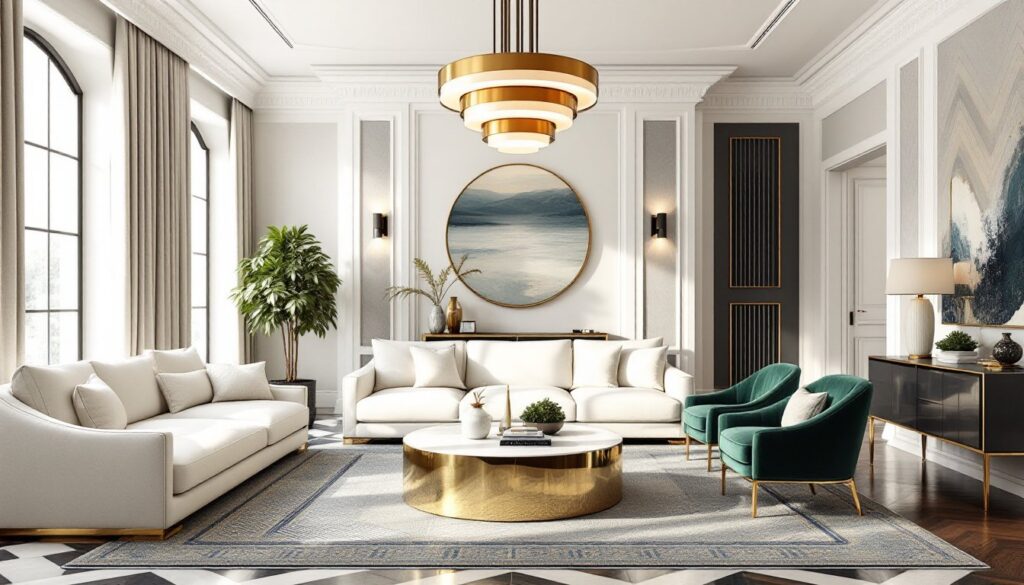
Modern Art Deco interior design takes the glamour, geometry, and bold materials of the 1920s and 30s and strips away the excess. What’s left is a refined aesthetic that pairs chrome and glass with clean lines, jewel tones with neutral backdrops, and statement pieces with functional minimalism. This isn’t about recreating a Gatsby-era salon, it’s about borrowing the drama and craftsmanship of Art Deco and making it work in today’s homes. Whether someone’s renovating a living room or adding accents to a bedroom, understanding the core principles makes the difference between a curated look and a costume party.
Key Takeaways
- Modern Art Deco interior design balances glamour with restraint by combining geometric forms, metallic accents, and jewel-tone colors while avoiding excess ornamentation.
- Geometry is the backbone of the style—use chevrons, hexagons, and sunburst patterns strategically on accent walls, floors, or mirrors rather than overwhelming entire rooms.
- Choose polished materials like brass, chrome, high-gloss lacquer, and marble to deliver visual impact while maintaining a contemporary, sustainable aesthetic.
- Apply a neutral base of white, gray, or beige walls and punctuate with deep jewel tones (emerald, sapphire, burgundy) in furniture, rugs, or drapery for balanced drama.
- Invest in layered lighting through statement chandeliers, geometric-framed fixtures, and table lamps to highlight materials and create mood in Art Deco spaces.
- Select furniture with defined silhouettes, tapered metal legs, and clean fronts rather than plush or slouchy shapes, keeping each piece intentional and uncluttered.
What Defines Modern Art Deco Interior Design?
Art Deco emerged in the early 20th century as a celebration of modernity, luxury, and geometric precision. The original movement featured ornate details, exotic materials like ebony and ivory, and a love of symmetry. Modern Art Deco keeps the bones but streamlines the execution.
The defining characteristics include strong geometric forms, think chevrons, zigzags, sunburst motifs, and stepped patterns. Unlike the heavily ornamented originals, modern interpretations use these shapes more sparingly, often as accent features rather than wall-to-wall coverage. Materials shift from rare woods and ivory to engineered stone, polished metals, and high-gloss lacquers that deliver visual impact without the vintage price tag or ethical concerns.
Another hallmark is the balance between opulence and restraint. A modern Art Deco space might feature a single statement mirror with a geometric brass frame rather than every surface dripping with detail. The palette leans on high contrast, black and white, navy and gold, emerald and cream, but modern applications often soften these with larger neutral zones. It’s a style that rewards intentionality: each piece should feel deliberate, not cluttered.
Key Elements That Bring Modern Art Deco to Life
Geometric Patterns and Bold Symmetry
Geometry is the backbone of Art Deco. Zigzag moldings, hexagonal tiles, and tiered shelving all nod to the movement’s obsession with order and repetition. In a modern space, these patterns work best when they anchor a room rather than overwhelm it.
Consider using geometric floor tiles in an entryway or powder room, black and white marble or porcelain in a classic checkerboard or more complex tessellation creates instant impact. For walls, wallpaper with a scaled-down deco pattern (think narrow chevrons or stylized florals) on a single accent wall keeps the look current without feeling like a museum recreation. Symmetry matters: center furniture around a focal point, flank a fireplace with matching sconces, and align artwork with architectural features.
Mirrors are another essential tool. Large, frameless or geometrically framed mirrors amplify light and space, a practical concern in many modern homes, while reinforcing the style’s love of reflection and shine. Look for octagonal, stepped, or sunburst shapes that echo classic motifs.
Luxurious Materials and Metallic Accents
Art Deco thrived on materials that caught the light: polished brass, chrome, glass, lacquer, and exotic veneers. Modern versions maintain that emphasis on surface quality but swap in more accessible and sustainable options.
Brass and brushed gold finishes dominate hardware, light fixtures, and furniture legs. Unlike the warm, aged brass of vintage pieces, contemporary reproductions often feature a cooler, cleaner tone that pairs well with gray and white palettes. Chrome and stainless steel offer a sleeker, more industrial edge, use these for faucets, cabinet pulls, and minimalist shelving.
For surfaces, high-gloss lacquer on cabinetry or furniture delivers that signature Art Deco sheen. Pair it with matte or textured fabrics (velvet, linen, or wool) to avoid a slippery, overdone look. Marble and terrazzo bring pattern and luxury underfoot or on countertops: engineered versions offer consistent patterning and easier maintenance than natural stone.
Glass elements, whether in the form of glass-topped tables, mirrored furniture, or frosted pendant shades, keep sight lines open and maintain a sense of airiness, balancing the heavier metallics and dark woods.
Color Palettes for a Modern Art Deco Space
Classic Art Deco embraced bold, high-contrast schemes: black and gold, navy and cream, emerald and ivory. Modern interpretations keep that drama but often soften the application.
A safe starting point is a neutral base, white, gray, or beige walls and flooring, punctuated with jewel-tone accents. Deep emerald green, sapphire blue, or rich burgundy work as upholstery colors, area rugs, or drapery without requiring a full room commitment. These saturated hues bring the opulence Art Deco is known for while staying grounded in contemporary sensibilities.
Metallic accents in gold, brass, or chrome act as the third layer, tying together neutrals and jewel tones. Use these in light fixtures, picture frames, or decorative objects. Black remains a powerful grounding element, consider black window frames, cabinetry, or furniture legs to add definition and contrast.
For those willing to go bolder, a monochromatic scheme in charcoal or navy with layered metallics creates a moody, sophisticated space. Balance dark walls with ample lighting, both natural and artificial, to avoid a cave-like feel. Conversely, an all-white or cream room with gold and glass accents skews lighter and more airy while still reading as Art Deco through its use of geometry and materials.
Avoid muddy mid-tones or overly rustic finishes. Art Deco is polished, urban, and unambiguous, colors should feel intentional, not accidental.
Furniture and Decor Choices That Capture the Style
Art Deco furniture is characterized by clean lines, geometric shapes, and luxurious detailing. Modern pieces reinterpret these with an eye toward livability and scale.
Look for upholstered pieces with defined silhouettes, rounded chair backs, low-profile sofas with tufted velvet, and benches with tapered brass or chrome legs. Avoid overly plush or slouchy shapes: Art Deco favors structure. A channel-tufted headboard or bench in velvet or leather adds texture without fussiness.
Case goods, dressers, credenzas, nightstands, should feature clean fronts, often in high-gloss finishes or veneers, with minimal or geometric hardware. Inlay work (contrasting wood tones or metal banding) is a classic touch that modern makers still reference. Look for pieces with stepped or tiered profiles that echo the movement’s architectural roots.
Lighting is where the style really shines. Chandeliers with geometric frames, globe pendants, or tiered designs in brass or chrome serve as focal points. Table lamps with frosted glass shades or sculptural bases add ambient glow without visual clutter. Don’t skimp here, Art Deco interiors rely on layered lighting to highlight materials and create mood.
For decor, less is more. A few statement pieces, an oversized mirror, a pair of ceramic or brass bookends, a sculptural vase, carry more weight than a shelf full of tchotchkes. Artwork should lean toward abstraction, portraiture, or graphic prints with strong compositions. Black-and-white photography in simple frames or large-scale geometric art works well.
How to Adapt Art Deco for Different Rooms
Living Room: Start with a neutral sofa and add jewel-tone accent chairs or a bold area rug with geometric patterning. A brass-framed coffee table with a glass or marble top anchors the seating area. Install a statement chandelier or a pair of matching sconces flanking a large mirror. Keep window treatments simple, solid-colored drapes in velvet or linen, mounted high and wide to emphasize ceiling height.
Bedroom: A channel-tufted headboard in velvet or leather sets the tone. Flank the bed with matching nightstands in lacquer or veneer and add brass or chrome table lamps. Stick to a muted palette (grays, creams, or soft blues) with metallic accents to keep the space restful. A geometric area rug and a low-profile bench at the foot of the bed complete the look without overcrowding.
Bathroom: This is where materials shine. Hexagonal or subway tiles in black and white on floors or walls instantly evoke the era. Pair with brass or chrome fixtures, a frameless or beveled mirror, and sconces with frosted glass shades. If space allows, a freestanding tub with claw feet or a geometric silhouette adds luxury. Keep grout lines tight and surfaces polished, precision matters.
Kitchen or Dining Room: High-gloss cabinetry in navy, black, or cream works well, especially when paired with marble or quartz countertops. Brass or gold cabinet pulls and faucets tie into the metallic theme. For dining, a round or rectangular table with a glass top and geometric base surrounded by upholstered chairs with metal legs captures the style. A tiered chandelier or a row of globe pendants over an island or table provides both function and flair.
In every room, remember that Art Deco is about editing as much as adding. Each element should earn its place.