
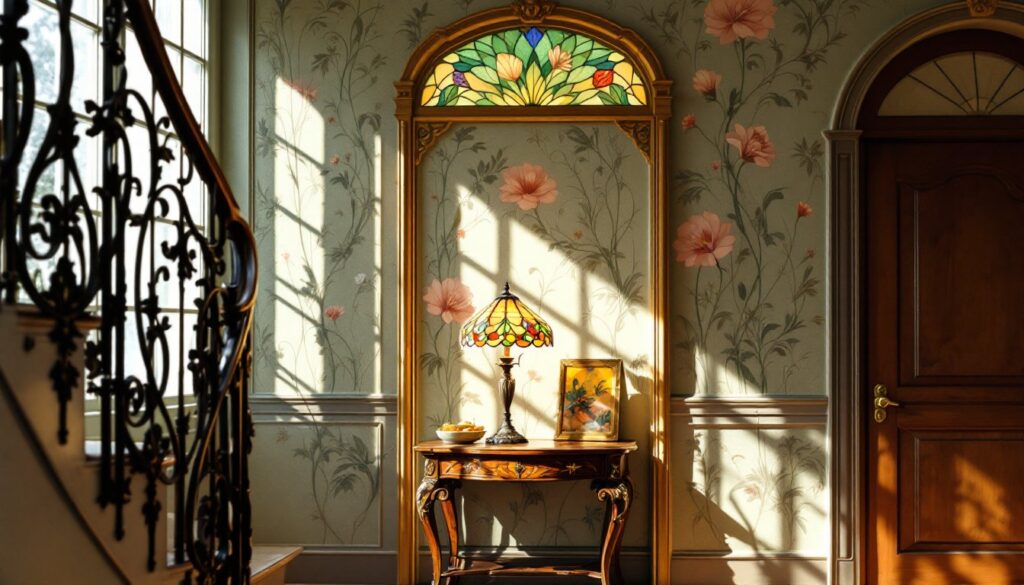
Art Nouveau emerged in the 1890s as a rebellion against industrial rigidity, bringing flowing lines and natural forms into architecture and interiors. Unlike styles that rely on symmetry and sharp angles, Art Nouveau celebrates curves, botanical motifs, and handcrafted details. For homeowners looking to add character without sacrificing livability, this style offers a unique blend of artistry and function. It’s not about recreating a period museum, it’s about borrowing elements that elevate everyday spaces with a sense of movement and warmth.
Key Takeaways
- Art Nouveau style interior design emphasizes organic curves, botanical motifs, and handcrafted materials like wrought iron, stained glass, and exotic hardwoods instead of rigid geometric forms.
- Incorporate Art Nouveau elements strategically by selecting one or two statement pieces—such as a custom railing, stained glass panel, or carved molding—rather than saturating a room with patterns to avoid a theme-park effect.
- Art Nouveau interiors use muted, nature-inspired color palettes including sage green, dusty rose, peacock blue, and ochre paired with rich wood tones and aged metal accents for a cohesive, enveloping atmosphere.
- Modern adaptations blend Art Nouveau design principles with minimalism, mid-century furniture, and contemporary earth tones to create graceful, functional spaces that honor the style without appearing dated or costume-like.
- Accessible updates like upgraded light fixtures, patterned tile in entryways or kitchens, accent wallpaper, and curated decorative accessories can capture Art Nouveau’s essence without expensive structural renovations.
What Is Art Nouveau Interior Design?
Art Nouveau (French for “new art”) flourished from roughly 1890 to 1910, bridging the ornate excesses of Victorian design and the clean lines of Modernism. It originated as a decorative arts movement across Europe and the United States, championed by designers like Victor Horta, Louis Comfort Tiffany, and Hector Guimard.
The style rejects historical revivalism in favor of innovation rooted in the natural world. Instead of copying Greek columns or Gothic arches, Art Nouveau interiors feature whiplash curves, stylized flowers, insects, and flowing hair, all rendered with craftsmanship that highlights the maker’s hand. Wrought iron, stained glass, carved wood, and hand-painted tile were signature materials.
In practical terms, Art Nouveau spaces feel organic and integrated. Doorways curve like petals, stair railings mimic vines, and light fixtures bloom like flowers. The goal isn’t decoration on surfaces, it’s design as the surface, where structure and ornament merge. For DIYers, understanding this principle helps when selecting finishes or focal points: look for pieces where form follows nature, not geometry.
Key Characteristics of Art Nouveau Interiors
Organic Forms and Nature-Inspired Motifs
Art Nouveau’s defining trait is its embrace of asymmetry and movement. Straight lines are rare: instead, curves dominate, tendrils, waves, and arabesques that guide the eye without rigid endpoints. Common motifs include:
- Florals: Poppies, irises, water lilies, and stylized blossoms
- Insects: Dragonflies, butterflies, beetles (often in stained glass or metalwork)
- Female figures: Long-haired women with flowing garments, symbolizing nature and beauty
- Underwater themes: Seaweed, shells, and undulating forms inspired by marine life
These elements appear in molding profiles, tile borders, wallpaper patterns, and metalwork. When adding Art Nouveau details to a modern home, focus on one or two statement pieces rather than wall-to-wall motifs, a carved mantel surround, a custom wrought iron railing, or a stained glass transom window. Overdoing it risks theme-park effect.
Signature Materials and Color Palettes
Art Nouveau favored materials that could be shaped, bent, or hand-finished:
- Wrought iron and bronze: Used for railings, light fixtures, and furniture frames with sinuous, plant-like forms
- Stained and leaded glass: Tiffany-style lamps and window panels in jewel tones (amber, emerald, sapphire)
- Exotic hardwoods: Mahogany, walnut, and fruitwoods with visible grain, often inlaid with lighter woods or mother-of-pearl
- Ceramic tile: Hand-painted or relief tiles featuring botanical designs, common in fireplace surrounds and entryways
Color palettes lean toward muted, nature-derived tones: sage green, dusty rose, ochre, peacock blue, and soft lavender. These are typically paired with rich wood tones and metallic accents in aged brass or patinated copper. High-contrast schemes (like stark white walls) don’t fit, Art Nouveau interiors layer tones for a cohesive, enveloping atmosphere.
For repainting or refinishing, consider low-VOC paints in custom-mixed earth tones rather than off-the-shelf neutrals. Many historic paint companies offer period-appropriate palettes that simplify color matching.
How to Incorporate Art Nouveau Elements Into Your Home
Full-scale Art Nouveau renovations are rare and expensive, but targeted updates can capture the style’s essence without structural overhaul.
Start with architectural trim and molding. Replace flat baseboards or door casings with profiles that include gentle curves or leaf motifs. Specialty millwork suppliers stock period-style moldings, or a local woodworker can mill custom profiles from poplar or pine for paint-grade work. Install using finish nails and wood glue: countersink nails and fill with putty before priming.
Add a stained glass element. A transom window above an interior doorway or a decorative panel in a cabinet door introduces color and light without major construction. Pre-made panels are available from artisan studios, or DIYers comfortable with soldering can assemble their own using copper foil technique. Safety note: Always wear safety glasses and work gloves when cutting glass: lead-free solder is recommended for indoor installations.
Upgrade light fixtures. Art Nouveau lighting often features blown glass shades in floral or dragonfly patterns, paired with bronze or brass hardware. Replace builder-grade fixtures in entryways, dining rooms, or bathrooms with reproduction Tiffany-style pendants or sconces. Ensure the fixture’s weight is supported by a properly rated junction box, many decorative glass fixtures exceed 10 lbs and require pancake box reinforcement or ceiling fan-rated boxes.
Introduce patterned tile sparingly. Entryway floors, fireplace hearths, or kitchen backsplashes are ideal spots for hand-painted ceramic tile. Look for 6×6-inch or 8×8-inch tiles with relief designs. Install over cementboard backer using thinset mortar and unsanded grout for tight joints. Seal porous glazes to prevent staining.
Consider wallpaper or stenciling. Period-accurate wallpapers with sweeping botanical or peacock feather patterns add instant drama. Apply to a single accent wall or wainscot height to avoid overwhelming a room. Prep walls with primer and ensure seams are plumb, Art Nouveau’s flowing patterns make misaligned seams very noticeable. Alternatively, DIY-friendly stencil kits let homeowners hand-paint motifs on primed drywall or furniture.
Permits typically aren’t required for cosmetic updates like trim, wallpaper, or fixtures. But, if relocating electrical boxes or modifying load-bearing walls to install arched openings, consult a licensed electrician or structural engineer and pull permits per local code.
Art Nouveau Furniture and Decor Essentials
Authentic Art Nouveau furniture, Emile Gallé cabinets, Louis Majorelle chairs, commands auction-house prices. Reproductions and inspired pieces offer accessible alternatives.
Key furniture traits:
- Curved legs and stretchers that mimic plant stems
- Marquetry inlays depicting flowers, vines, or insects
- Upholstery in velvet or damask with jewel tones or floral jacquards
- Minimal ornamentation beyond the natural wood grain and gentle shaping
Look for furniture makers who specialize in hand-carved details rather than CNC-routed mass production. A single statement piece, a hallway console, bedroom armoire, or side chair, anchors a room better than a full suite.
Decorative accessories complete the look:
- Tiffany-style table lamps with leaded glass shades
- Ceramic vases with organic, asymmetrical forms (Rookwood, Roseville, or contemporary studio pottery)
- Mirrors with carved frames featuring whiplash curves or floral garlands
- Textile throws and pillows in embroidered silk or linen with botanical motifs
When sourcing decor, estate sales and antique markets often yield better values than retail reproductions. Inspect joinery on furniture, dovetail drawers and mortise-and-tenon construction indicate quality. Avoid pieces with stapled upholstery or particle board construction labeled “Art Nouveau style.”
Modern Adaptations of Art Nouveau Style
Contemporary interiors rarely commit to pure period accuracy. Instead, successful Art Nouveau adaptations borrow motifs and principles while maintaining modern functionality and cleaner backdrops.
Blend with minimalism: Use Art Nouveau pieces as sculptural focal points against neutral walls and uncluttered spaces. A sinuous wrought iron railing or a single stained glass panel gains impact when it’s not competing with busy patterns elsewhere.
Mix eras intentionally: Pair an Art Nouveau mirror or light fixture with mid-century modern furniture. Both styles celebrate craftsmanship and organic forms, creating visual harmony even though different time periods.
Update the palette: Swap traditional ochres and dusty roses for contemporary earth tones, charcoal, terracotta, deep teal. This keeps the natural inspiration but feels current. Matte finishes on walls and cabinetry provide a modern counterpoint to glossy vintage glass and polished wood.
Simplify motifs: Instead of intricate hand-painted florals, choose stylized botanical patterns in wallpaper or textiles. Laser-cut metal panels with nature-inspired designs offer Art Nouveau’s curves with a crisp, modern execution.
Whether restoring a period home or borrowing elements for a new build, the key is intentionality. Art Nouveau works best when it’s integrated thoughtfully, not as a costume, but as a layer of crafted beauty that makes daily life a little more graceful.