
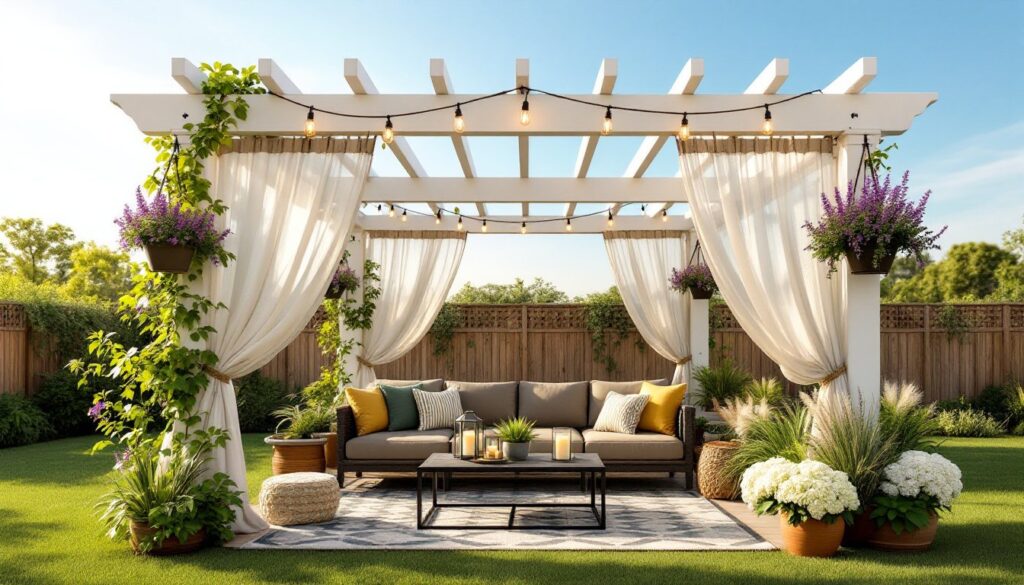
A bare pergola frame is like a blank canvas, full of potential but missing personality. Whether it’s a freestanding structure in the yard or attached to the house, the right decor transforms a simple shade structure into an outdoor living room, dining area, or garden retreat. The key is balancing function with aesthetics: choosing elements that withstand weather, require minimal upkeep, and match how the space gets used. From string lights and climbing vines to outdoor rugs and privacy screens, homeowners have dozens of options to customize their pergola without a major renovation or structural changes.
Key Takeaways
- String lights with Edison-style bulbs and weather-resistant drapes create ambiance while low-voltage LED tape offers a cleaner alternative for pergola spaces without visible cords.
- Climbing vines like clematis and climbing hydrangeas integrate greenery into your pergola design, with galvanized wire guides helping younger plants establish faster coverage.
- All-weather furniture made from wicker, aluminum, or solution-dyed acrylic fabrics combined with polypropylene rugs ensures durability and comfort year-round.
- Pergola decor accents like outdoor artwork, acrylic mirrors, and weather-resistant pillows add personality while maintaining structural integrity under sun and rain exposure.
- Removable elements such as lightweight drapes, shade sails, and portable heating solutions allow seasonal versatility without requiring permanent renovations or structural changes.
- Lattice panels, privacy screens, and shade cloth mounted to pergolas improve both privacy and sun protection while supporting climbing plants for added visual interest.
Create Ambiance with Lighting and Draping
Lighting sets the mood once the sun goes down. String lights remain the most popular choice, Edison-style bulbs provide warm, ambient light and install easily along rafters or cross beams using cup hooks or cable clips rated for outdoor use. For a cleaner look, homeowners can route low-voltage LED tape along the top of beams, which requires a transformer but eliminates visible cords.
Solar-powered lanterns and pendant lights work well for pergolas without nearby electrical access. Hang them at varying heights from shepherd’s hooks or S-hooks screwed into beams. Always verify weight ratings, most 4×4 or 6×6 rafters handle decorative lighting loads easily, but heavier chandeliers may need additional blocking.
Outdoor fabric drapes soften the structure and add movement. Weather-resistant polyester or Sunbrella fabrics resist fading and mildew better than cotton. Install curtain rod brackets on pergola posts using 3-inch exterior screws into solid wood, not just surface trim. Grommeted panels slide easily and tie back with rope or bungee cords during windy conditions. For full enclosure, use track systems designed for outdoor pergolas, these allow fabric to slide open and closed and typically mount to the underside of beams.
Sheer fabric creates a romantic canopy effect when draped over the top lattice, but it needs regular removal for cleaning and storm prep. Use fabric clips or Velcro strips instead of staples to avoid permanent holes and allow seasonal swaps.
Add Greenery and Vertical Gardens
Living plants integrate a pergola into the landscape rather than making it feel like an afterthought. Climbing vines are the classic choice, wisteria, climbing roses, and clematis all thrive on pergola structures, though each has different support needs. Wisteria grows aggressively and can stress lightweight pergolas over time: it’s best suited for heavy-duty builds with 6×6 posts and properly anchored footings. Clematis and climbing hydrangeas are gentler on structures.
For faster coverage, annual vines like morning glory or black-eyed Susan vine fill in a season but need replanting each year. Perennial options take longer to establish but return stronger each season. Install galvanized wire or jute twine along posts and beams to guide young growth, plastic-coated garden wire works but degrades in UV exposure within a couple of years.
Hanging planters bring greenery at eye level. Use ceiling hooks rated for at least 20 pounds (plants get heavier when watered), and install them into rafters, not just lattice. Self-watering planters reduce maintenance, especially during hot months. For vertical interest, mount trellis panels or wire grid systems on pergola posts to support potted vines or create living walls with modular planter boxes.
Potted plants clustered around the base soften hard edges. Group containers in odd numbers and vary heights using plant stands or upturned nursery pots. Mixing evergreens with seasonal blooms keeps the space looking intentional year-round.
Furnish for Comfort and Style
Furniture defines how people use the space. A pergola over a dining area needs a table that seats the household plus guests, while a lounge setup calls for deep-seating sectionals or Adirondack chairs. All-weather wicker and powder-coated aluminum frames handle rain and sun better than untreated wood, which requires annual sealing.
Outdoor cushions made from solution-dyed acrylic fabrics (like Sunbrella) resist water and UV damage. Storage benches or deck boxes keep cushions dry between uses and double as extra seating. For year-round comfort in variable climates, consider outdoor heating elements, tabletop propane heaters extend usability into shoulder seasons without requiring hardwired gas lines.
Outdoor rugs anchor furniture groupings and add color. Polypropylene rugs shed water and resist mold, making them a better choice than natural fibers like jute or sisal. Size the rug so all furniture legs sit on it, or at least the front legs, this visually connects pieces. Rug pads designed for outdoor use prevent slipping and allow airflow underneath to reduce moisture buildup.
Coffee tables and side tables with slatted tops or perforated surfaces let rainwater drain rather than pooling. If using a solid-top table, a slight tilt or drainage hole prevents standing water that accelerates rust and rot.
Incorporate Decorative Accents and Personal Touches
Accents give a pergola personality beyond the structure itself. Outdoor artwork designed for weather exposure, metal sculptures, ceramic plaques, or UV-resistant prints in sealed frames, adds visual interest to blank post faces. Avoid paper-based art or untreated wood signs, which warp and fade quickly.
Mirrors create the illusion of more space and reflect greenery. Use acrylic mirrors instead of glass for safety and weight, and ensure mounting hardware is stainless steel or galvanized to prevent rust stains on posts. Position mirrors to reflect garden views rather than direct sun, which can create hot spots and glare.
Wind chimes and hanging decor bring sound and movement. Stainless steel or powder-coated aluminum chimes hold up better than bamboo, which splits in freezing temperatures. Install using swivel hooks so items can rotate freely without tangling.
Outdoor pillows in weather-resistant fabrics add comfort and seasonal color. Store them indoors during extended rain or winter to prolong life. For a cohesive look, repeat one accent color across pillows, planters, and other textiles.
Candles and lanterns provide ambient lighting and scent. Use flameless LED candles in areas with fabric drapes or dry plantings to reduce fire risk. Citronella candles offer bug deterrent, though efficacy drops in open, breezy spaces.
Design for Seasonal Versatility
A well-decorated pergola adapts to changing weather and holidays without a full redesign. Removable elements make seasonal swaps easier, swap lightweight summer drapes for heavier canvas panels in fall, or replace floral cushions with earth-tone plaids.
Outdoor throws in fleece or waterproof fabrics extend comfort into cooler months. Store them in a weather-resistant basket or bin within arm’s reach of seating. Portable fire pits (propane or wood-burning, depending on local regulations) add warmth and become a gathering focal point. Always place fire features on non-combustible surfaces and maintain clearance from drapes and overhanging plants.
Holiday lighting integrates easily into existing string light setups. Use dimmer-compatible bulbs or smart plugs to adjust brightness and timing. For winter, consider evergreen garland wrapped around posts or draped along beams, real garland adds scent but dries out and sheds needles, while high-quality artificial garland lasts multiple seasons.
Shade solutions adapt to summer heat. Retractable canopies or shade sails mounted to pergola corners provide variable coverage and typically install using heavy-duty eye bolts lagged into posts or beams. Bamboo roll-up shades offer a natural look and allow partial light while blocking direct overhead sun.
Enhance Privacy and Shade
An open pergola offers minimal privacy or sun protection, but add-ons fix both without altering the frame. Lattice panels mounted between posts create partial screening and support climbing plants. Use pressure-treated or cedar lattice for longevity, and mount with exterior-grade screws and spacers to allow airflow behind the panels, reducing rot.
Outdoor privacy screens made from powder-coated metal, composite wood, or UV-resistant resin install as freestanding units or attach directly to posts. Screens with geometric or laser-cut patterns add visual interest while still blocking sightlines from neighbors.
Bamboo fencing or reed screening rolls out along one or more sides and ties to posts with zip ties or galvanized wire. Natural materials weather to gray over time and may need replacement every few years, but they’re inexpensive and easy to swap.
Shade cloth stapled or clipped to the top lattice blocks 30% to 90% of sunlight depending on weave density, reducing heat underneath without full enclosure. Choose knitted shade cloth over woven, it resists tearing and fraying better. For a more finished look, polycarbonate or corrugated metal roofing panels install over sections of the pergola, providing rain protection and solid shade. This changes the structure’s open feel but significantly increases usability during storms. Check local codes, adding a solid roof may reclassify the structure and trigger permit requirements.
Conclusion
Decorating a pergola isn’t about filling every inch, it’s about choosing elements that make the space comfortable, functional, and worth using. Start with the basics: lighting, seating, and shade. Layer in greenery, textiles, and accents that reflect how the space gets used, whether that’s morning coffee, weekend dinners, or evening reading. Most importantly, choose materials built to handle weather exposure so the space looks intentional, not neglected, six months down the line.