
Mobile, Alabama isn’t just a coastal city with Southern charm and affordable living, it’s becoming a quiet hub for tiny home buyers looking to downsize without sacrificing quality of life. With mild winters, Gulf Coast proximity, and a growing acceptance of alternative housing, Mobile offers a practical environment for those ready to embrace compact living. But buying a tiny home here involves more than browsing listings. Prospective buyers need to understand zoning laws, financing quirks, and where these homes actually exist in the local market. This guide walks through everything from foundation types to county regulations, so buyers can make informed decisions in 2026.
Key Takeaways
- Tiny homes for sale in Mobile, AL range from $45,000–$130,000 depending on type and finish, with RV loans offering 10–15 year terms at 6–9% interest for certified units.
- Mobile’s cost of living is 14% below the national average, and rural land costs $2,000–$5,000 per acre, making downsize affordable without sacrificing location or lifestyle.
- Zoning is the biggest challenge: tiny houses on wheels are prohibited on residential city lots but allowed in RV parks or on 1–2 acre agricultural county properties, while foundation-based homes are easier to finance and zone.
- Foundation-based tiny homes must meet International Residential Code Appendix Q standards, including 6 feet 8 inches ceiling height and compliance with hurricane tie-downs, as Mobile is in a high-wind zone.
- Buyers should budget $8,000–$15,000 for septic systems and factor in $2–$4 per mile for THOW transportation plus $3,000–$10,000 for utility hookups before finalizing a purchase.
- Consulting a local zoning attorney before purchasing land is essential, as zoning rules vary significantly between city and county areas, and enforcement differs block to block.
Why Mobile, Alabama Is Perfect for Tiny Home Living
Mobile’s climate and cost structure make it one of the better Gulf Coast cities for tiny home ownership. Winter temperatures rarely dip below freezing, meaning minimal insulation upgrades and no need for heavy-duty heating systems that eat up space and budget. Cooling is the bigger concern, summers are humid and hot, but a mini-split HVAC system (typically 9,000–12,000 BTU for a 400-square-foot tiny home) handles the load efficiently.
The cost of living in Mobile runs about 14% below the national average as of 2026, and that extends to land prices. Rural parcels in Mobile County and neighboring Baldwin County can be found for $2,000–$5,000 per acre, giving tiny home buyers the option to purchase land outright rather than rent a pad. Utility hookups, water, septic, and electric, are straightforward in unincorporated areas, though buyers should budget $8,000–$15,000 for a basic septic system if municipal sewer isn’t available.
Mobile also has a growing tiny home community, with several RV parks and mobile home communities beginning to welcome certified tiny houses on wheels. The city’s proximity to beaches, the Mobile-Tensaw Delta, and outdoor recreation adds lifestyle value without the price tag of Florida’s panhandle markets.
Types of Tiny Homes Available in Mobile
Tiny homes fall into two broad categories in the Mobile market, and the distinction matters for zoning, financing, and resale.
Tiny Houses on Wheels
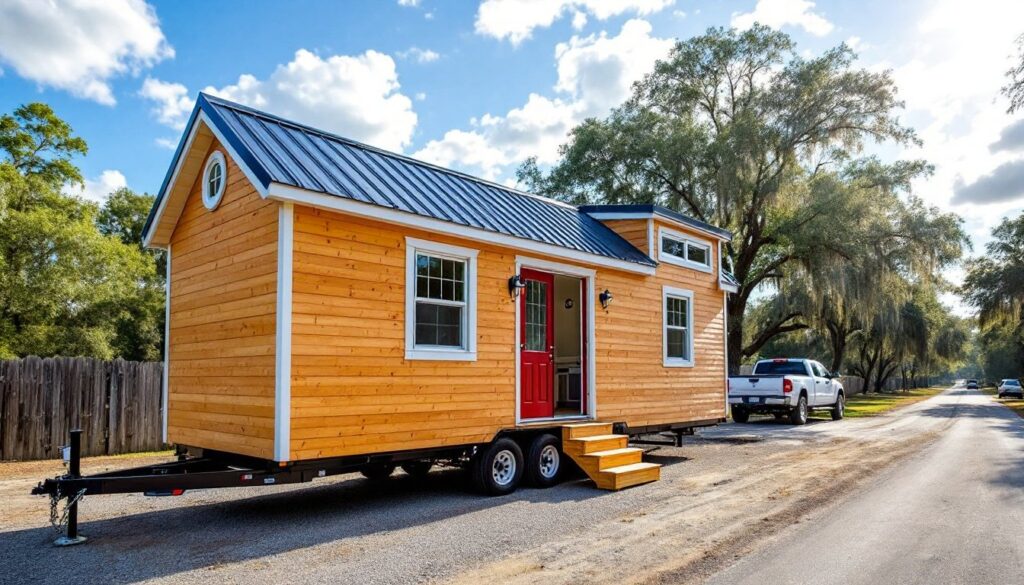
Tiny houses on wheels (THOWs) are built on trailers and classified as RVs if they meet RVIA (Recreational Vehicle Industry Association) certification standards. In Mobile, most THOWs range from 16 to 28 feet in length and weigh between 10,000 and 14,000 pounds when fully loaded. These homes sit on dual-axle or triple-axle trailers with a gross vehicle weight rating (GVWR) that determines towing requirements, anything over 10,000 pounds typically needs a 3/4-ton truck or larger.
Buyers should confirm the trailer frame is built to code. Look for welded steel frames with a minimum 6-inch I-beam construction. Poorly built frames can sag or twist, causing structural issues within a few years. RVIA certification also ensures the electrical system meets NEC (National Electrical Code) standards for mobile dwellings, which matters for insurance and park placement.
THOWs offer flexibility, owners can relocate them, but Mobile County treats them as RVs, meaning they’re generally prohibited on residential lots unless the property is zoned agricultural or the home is parked in an approved RV park.
Foundation-Based Tiny Homes
Foundation-based tiny homes are permanent structures, typically built on concrete piers, slab foundations, or crawl spaces. These homes must meet the International Residential Code (IRC) Appendix Q, which sets minimum standards for dwellings under 400 square feet. In Mobile County, that means:
- Minimum ceiling height of 6 feet 8 inches in most areas (with allowances for lofts)
- At least one room of 120 square feet or more
- Compliance with local wind load requirements (Mobile is in a hurricane zone, so tie-downs and shear wall bracing are non-negotiable)
Foundation-based tiny homes are easier to finance through traditional mortgages and are treated as real property, meaning they can appreciate in value. They’re also subject to property taxes and require building permits. Expect permit costs of $500–$1,200 depending on square footage and complexity.
Most foundation tiny homes in Mobile are custom builds or modular units delivered on flatbed trucks. Builders in the region often use 2×4 stud framing with metal roofing and fiber cement siding for durability in coastal humidity.
Where to Find Tiny Homes for Sale in Mobile, AL
The Mobile tiny home market is scattered across private sellers, builders, and resale platforms. Here’s where buyers actually find inventory:
Local builders and custom shops: Several builders within a 100-mile radius of Mobile specialize in tiny homes. These shops typically offer turnkey builds starting around $50,000 for a basic THOW and running up to $120,000 for a foundation model with premium finishes. Custom builds take 3–6 months from deposit to delivery. Buyers should visit the shop, inspect previous builds, and confirm the builder pulls permits and provides a certificate of occupancy or RVIA certification.
Online marketplaces: Websites like Tiny House Listings, Facebook Marketplace, and Craigslist often feature used THOWs in the Mobile area. Prices for pre-owned models range from $30,000 to $70,000 depending on age and condition. Buyers should inspect the trailer frame for rust, check for roof leaks (especially around skylights and vents), and verify the plumbing and electrical systems were installed to code. Bring a licensed home inspector familiar with tiny homes, standard inspectors often miss trailer-specific issues.
RV dealerships: A few RV dealers in Mobile and Baldwin County have started carrying park model RVs and certified tiny homes. These units are move-in ready and often come with financing options through the dealership. Expect to pay a 10–15% markup compared to buying directly from a builder, but the trade-off is immediate availability.
Land and home packages: Some builders offer land-and-build packages where they help buyers secure a rural lot and deliver a turnkey tiny home. This option works well for buyers unfamiliar with Mobile County’s permitting process, but verify the builder handles septic permitting and utility coordination, it’s not always included.
Pricing and Financing Options for Mobile Tiny Homes
Tiny home pricing in Mobile varies widely based on type, size, and finish level. As of 2026, expect these ranges:
- DIY shell kits: $10,000–$25,000 (buyer finishes interior)
- Basic THOW (new): $45,000–$70,000
- High-end THOW with appliances and custom finishes: $75,000–$110,000
- Foundation tiny home (turnkey): $60,000–$130,000
Financing a tiny home is trickier than a traditional mortgage. THOWs are usually financed through RV loans or personal loans. RV loans require the home to be RVIA-certified and typically offer 10- to 15-year terms at 6–9% interest (rates as of early 2026). Lenders like LightStream, Essex Credit, and local credit unions in Mobile have experience with tiny home financing.
Foundation-based tiny homes can qualify for traditional mortgages if they’re on owned land and meet local building codes. But, many lenders have minimum loan amounts ($50,000–$75,000), which can be a barrier for smaller builds. Construction loans are another option for custom builds, buyers get funds in stages as the build progresses, but these require a 10–20% down payment and convert to a standard mortgage upon completion.
Some buyers finance through personal loans or home equity lines of credit (if they own other property). Personal loans for $50,000–$80,000 typically carry higher interest rates (8–12%) but avoid the complications of RV or construction loans.
Buyers paying cash should still budget for delivery, setup, and hookups. Transporting a THOW from a builder 100 miles away costs $2–$4 per mile with a professional towing service. Utility connections (electric panel, water line, septic or sewer) add another $3,000–$10,000 depending on site conditions.
Zoning Laws and Placement Regulations in Mobile County
Zoning is the biggest hurdle for tiny home buyers in Mobile. The city and county have different rules, and violating them can result in fines or forced removal.
City of Mobile: Within city limits, tiny homes on wheels are classified as RVs and prohibited on residential lots unless parked in an approved RV park. Foundation-based tiny homes are allowed on residential lots if they meet minimum square footage requirements, historically 600 square feet for single-family homes, though Appendix Q adoption in some jurisdictions has lowered that to 400 square feet. Buyers should confirm with the Mobile Planning Department before purchasing land or starting a build.
Mobile County (unincorporated areas): County zoning is more flexible. Tiny homes on permanent foundations are generally allowed on agricultural or residential lots, provided they meet IRC Appendix Q standards and pass inspection. THOWs are allowed on agricultural-zoned land (A-1, A-2) as accessory structures or temporary dwellings, but the property must be at least 1–2 acres depending on the parcel’s classification.
RV parks and tiny home communities: Several RV parks in Mobile and Baldwin County accept tiny homes on wheels, but require RVIA certification and proof of insurance. Monthly pad rent ranges from $350 to $600, typically including water, sewer, and trash. Some parks have restrictions on home age (no older than 10 years) and exterior appearance.
Permits and inspections: Foundation tiny homes require a building permit, electrical permit, and plumbing permit. Mobile County inspectors will check framing, electrical (must meet NEC), plumbing (must meet IPC), and wind load compliance. Budget 4–8 weeks for the permitting and inspection process. THOWs don’t require building permits if RVIA-certified, but must still meet wind tie-down requirements if parked long-term, hurricane straps and ground anchors are mandatory in coastal zones.
Septic and water: If the property isn’t on municipal sewer, buyers need a septic permit from the Mobile County Health Department. Soil percolation tests and system design cost $500–$1,000, and installation runs $8,000–$15,000 for a standard system. Well permits are handled separately and cost around $300, with drilling and pump installation adding $5,000–$10,000 depending on depth.
Buyers should consult a local land use attorney or zoning consultant before closing on land. Rules change, and enforcement varies, what’s allowed on one parcel may not be permitted on another a mile away. Getting the zoning right upfront prevents costly mistakes down the road.