
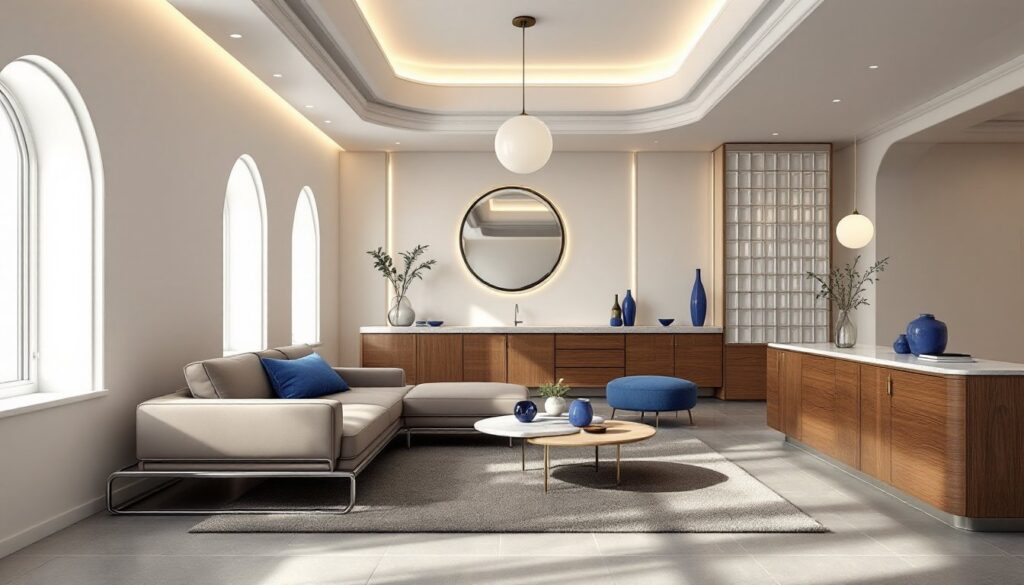
Art Moderne emerged during the 1930s as a sleeker, more streamlined evolution of Art Deco. While Art Deco leaned toward geometric opulence, Art Moderne embraced aerodynamic curves, horizontal emphasis, and industrial materials that captured the machine-age optimism of the era. This style, sometimes called Streamline Moderne, offers a sophisticated, retro-futuristic aesthetic that translates surprisingly well into modern homes. Whether renovating a period property or layering vintage flair into a contemporary space, understanding the fundamentals of Art Moderne helps homeowners achieve authentic results without turning their living room into a museum exhibit.
Key Takeaways
- Art Moderne interior design prioritizes streamlined forms, horizontal lines, and smooth curves—a refined evolution of Art Deco that strips away ornate excess in favor of machine-age elegance.
- Incorporate Art Moderne through strategic architectural details like rounded bullnose corners, flush-slab doors, concealed lighting, and glass block accents rather than requiring a full renovation.
- Luxurious materials including chrome, glass block, terrazzo, burled wood veneers, and polished finishes define the aesthetic while maintaining the style’s emphasis on clean, functional design.
- Neutral color palettes with bold accent colors like cobalt blue or chrome yellow create authentic Art Moderne interiors that feel both vintage and contemporary.
- Art Moderne integrates more easily into modern homes than its predecessor Art Deco because of its understated elegance, horizontal emphasis, and compatibility with minimalist design.
What Is Art Moderne Interior Design?
Art Moderne is an architectural and interior design movement that peaked between 1930 and 1945. Born from the Great Depression and influenced by industrial design, streamlined locomotives, and ocean liners, it represented a departure from the ornate zigzags and sunburst motifs of Art Deco. The style prioritized function, movement, and modernity.
Unlike its predecessor, Art Moderne stripped away decorative excess. Designers favored smooth, unadorned surfaces, curved corners (often using rounded bullnose drywall corners or plastered edges), and long horizontal lines that suggested speed and progress. Chrome, glass block, Bakelite, and polished metal became signature materials. Interiors featured built-in furniture, concealed lighting, and wraparound windows, elements borrowed directly from ships and railcars.
Many surviving examples sit in Miami Beach, Los Angeles, and other coastal cities where the style flourished. For homeowners today, Art Moderne isn’t about recreating a 1930s time capsule, it’s about borrowing its sleek confidence and applying it selectively. Think curved wet bars, porthole mirrors, and streamlined cabinetry rather than full-scale replicas.
Key Characteristics of Art Moderne Interiors
Streamlined Forms and Horizontal Lines
Horizontal emphasis defines Art Moderne. Baseboards, chair rails, and trim run low and wide. Windows stretch across walls in ribbons rather than stacking vertically. Even furniture, low-slung sofas, streamlined credenzas, and platform beds, hugs the floor.
Curves appear frequently but they’re smooth and aerodynamic, not ornate. Rounded bullnose corners replace sharp 90-degree angles, especially around doorways and alcoves. Achieving this detail in a renovation requires either flexible drywall corner bead or traditional three-coat plaster over metal lath, not a quick weekend project, but one that fundamentally changes a room’s character. Contractors experienced in mid-century work can install bullnose bead and finish it smooth: DIYers attempting this should practice on scrap first, as the compound must feather perfectly to avoid visible ridges.
Built-ins are another hallmark. Streamlined cabinetry, integrated bookshelves, and recessed niches eliminate visual clutter. Original Art Moderne interiors often featured flush-mounted cabinets with concealed pulls or recessed finger grips, maintaining clean lines.
Luxurious Materials and Sleek Finishes
Art Moderne celebrated industrial materials but applied them with elegance. Glass block appeared in interior partitions, bathroom walls, and entryways, diffusing light while maintaining privacy. Standard 8″ x 8″ glass block remains available and installs similarly to tile, mortared and grooved, though heavier and requiring proper structural support for larger installations.
Chrome and stainless steel hardware, railings, and accents provided contrast against pale plaster walls. Mirrors, especially round porthole-style mirrors, bounced light and enhanced the sense of space. Terrazzo flooring, with its smooth, polished surface and subtle aggregate pattern, appeared in upscale Art Moderne homes and commercial spaces.
Wood veneers, especially burled walnut, zebrawood, and blonde maple, added warmth without busy grain patterns. Lacquered finishes, high-gloss and reflective, appeared on furniture and built-ins. For a modern take, homeowners can use water-based polyurethane in satin or semi-gloss for durability without the yellowing associated with oil-based lacquer.
Color palettes leaned neutral: soft grays, creams, taupes, and whites dominated, punctuated by bold accent colors like cobalt blue, chrome yellow, or black. Walls were often smooth plaster, not textured, skip the orange peel finish if authenticity matters.
How to Incorporate Art Moderne Style in Your Home
Bringing Art Moderne into a contemporary home doesn’t require gutting walls or hunting down antiques. Strategic updates and careful material choices create the effect.
Start with architectural details. If undertaking a larger remodel, consider:
- Replacing standard drywall corners with rounded bullnose profiles in key areas (entryways, archways, kitchen pass-throughs)
- Installing horizontal trim or shadow lines at chair-rail height
- Swapping traditional six-panel doors for flush slab doors in smooth hardboard or MDF, painted in high-gloss enamel
- Adding a curved soffit or bulkhead over a kitchen peninsula or bar area
Focus on lighting. Art Moderne interiors used concealed cove lighting and recessed fixtures rather than ornate chandeliers. LED strip lighting tucked into crown molding or behind floating shelves mimics the soft, indirect glow. Frosted glass globe fixtures and torpedo-shaped sconces evoke the era without feeling costumey.
Select furniture carefully. Look for pieces with:
- Low profiles and wide proportions
- Curved or waterfall edges (especially on tables and case goods)
- Chrome tube frames or legs
- Upholstery in solid, smooth fabrics, no busy prints
Vintage pieces can be sourced through estate sales or mid-century dealers, but modern reproductions exist. Restoration Hardware and CB2 occasionally offer streamlined designs that nod to the period.
Integrate glass block sparingly. A small glass block partition in a bathroom or as a kitchen backsplash adds period flavor without overwhelming the space. Installation requires mortar, spacers, and often a steel lintel or frame, treat it like a masonry project. Wear gloves and safety glasses: glass block edges can be sharp during handling.
Choose hardware and fixtures with intention. Swap builder-grade cabinet pulls for streamlined horizontal bar pulls in brushed chrome or polished nickel. Faucets with clean, cylindrical spouts and minimal detailing fit better than ornate traditional styles.
Paint strategically. Stick to a neutral base with one or two bold accent walls or color-blocked panels. High-gloss or semi-gloss finishes on trim and doors enhance the sleek aesthetic, use a foam roller and light sanding between coats for a smooth result.
Don’t ignore flooring. If replacing flooring, consider:
- Polished concrete with a smooth trowel finish
- Large-format porcelain tile in solid colors
- Terrazzo-look tile or poured terrazzo (the latter requires professional installation and is expensive)
- Wide-plank engineered hardwood in lighter tones, finished with a satin sheen
Avoid heavily distressed wood, busy tile patterns, or rustic textures, they clash with the streamlined ethos.
Art Moderne vs. Art Deco: Understanding the Differences
Art Moderne and Art Deco are siblings, not twins. Both emerged in the early 20th century, but they diverged in philosophy and form.
Art Deco (roughly 1920s to early 1930s) is bold, geometric, and decorative. Think zigzag patterns, sunbursts, chevrons, exotic woods, and lavish ornamentation. It celebrated luxury and craftsmanship with a theatrical flair. Interiors featured rich colors, emerald, gold, burgundy, and materials like marble, shagreen, and lacquered wood.
Art Moderne (1930s to 1940s) stripped that exuberance down. It embraced industrial efficiency, horizontal flow, and understated elegance. Ornamentation disappeared in favor of smooth curves, aerodynamic shapes, and machine-made materials. Colors became more subdued: forms more functional.
In practical terms:
- Art Deco uses geometric tile mosaics: Art Moderne uses solid-color glass block.
- Art Deco favors stepped, angular moldings: Art Moderne favors streamlined, rounded edges.
- Art Deco leans vertical and dramatic: Art Moderne leans horizontal and calm.
Both styles work in modern homes, but Art Moderne integrates more easily into minimalist or mid-century spaces, while Art Deco pairs well with more maximalist, eclectic interiors. Homeowners drawn to clean lines and subtle sophistication often find Art Moderne the easier fit.
Conclusion
Art Moderne offers a refined, understated alternative to more ornate design movements. Its emphasis on streamlined forms, luxurious materials, and horizontal flow translates well into contemporary homes, especially for those who appreciate vintage character without sacrificing modern livability. By focusing on key architectural details, rounded corners, sleek finishes, integrated lighting, and selecting materials thoughtfully, homeowners can channel 1930s glamour in a way that feels intentional, not nostalgic.