
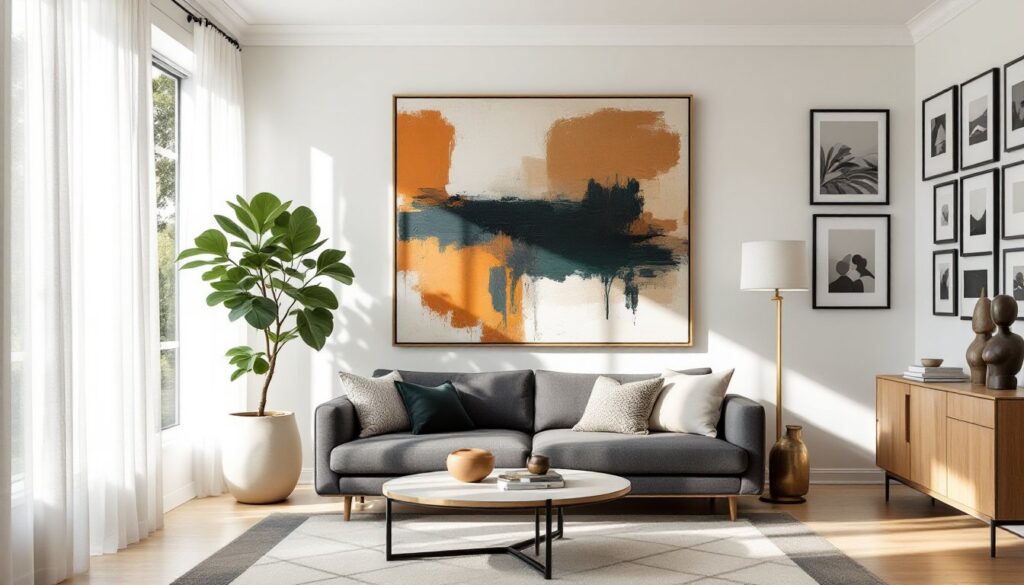
Art is one of the most underutilized tools in a home renovation or redesign. While homeowners obsess over paint colors and flooring, wall art and sculptural pieces often get treated as afterthoughts, usually generic prints picked up in a rush before the housewarming party. But interior design art is more than decoration. It sets the mood, establishes focal points, and can even influence how a room feels structurally, making a cramped hallway feel taller or a sprawling family room feel anchored. Done right, art transforms dead space into conversation starters and rooms into cohesive, intentional environments. This guide covers what interior design art actually is, what types work best, and how to choose, place, and keep up with trends without turning your home into a rotating gallery.
Key Takeaways
- Interior design art serves a dual purpose—aesthetic appeal and functional design—by establishing focal points, controlling sightlines, and transforming spaces into intentional, finished environments.
- Choose interior design art based on scale, color strategy, and room purpose; aim for pieces spanning two-thirds to three-quarters of the width of anchor furniture for visual balance.
- Hang artwork at 57–60 inches from the floor (gallery height) with 6–8 inches of clearance above furniture and use proper hanging hardware to ensure durability and a polished appearance.
- Current interior design art trends favor handmade and artisan work, large-scale abstracts with earthy tones, vintage pieces, and mixed media over mass-produced generic prints.
- Sculptures and three-dimensional art add physical presence and break up horizontal surfaces on shelves and mantels, while leaning frames offers flexibility for renters and frequent design changes.
What Is Interior Design Art and Why Does It Matter?
Interior design art refers to any visual or sculptural work selected and displayed specifically to complement and enhance a living space. Unlike gallery art, which is chosen for artistic merit alone, interior design art serves a dual purpose: aesthetic appeal and functional design. It fills vertical space, breaks up monotonous wall planes, introduces color or texture, and directs the eye through a room.
In practical terms, art acts as a finishing layer. It’s what you add after the structural work, paint, and furniture placement are complete. Think of it like trim or hardware, technically optional, but it’s the difference between a space that feels finished and one that feels incomplete.
Art also solves real design problems. A large canvas above a sofa anchors seating arrangements. A gallery wall in a narrow hallway draws attention upward, making the space feel less tunnel-like. Sculptural pieces on open shelving add depth and break up horizontal lines. Ignoring art means missing an opportunity to control sightlines, balance proportions, and inject personality into otherwise neutral builds.
Types of Art That Elevate Interior Design
Not all art works the same way in a home. Understanding the strengths of each type helps match the right piece to the right spot.
Paintings and Prints
Paintings and prints are the workhorses of interior design art. They’re versatile, widely available, and easy to swap out. Framed canvas paintings bring texture and depth, particularly oils or acrylics with visible brushwork. They work well in living rooms, dining areas, and primary bedrooms where a statement piece is needed.
Giclée prints (high-quality inkjet prints on canvas or archival paper) offer affordability without sacrificing visual impact. They’re ideal for renters or anyone hesitant to commit to original work. Frame quality matters here, cheap plastic frames undercut even the best print. Go with wood or metal frames with archival matting to prevent yellowing.
Photography has gained traction in modern interiors, especially large-format black-and-white prints. They suit minimalist or industrial spaces but can feel cold in traditional homes unless balanced with warmer materials like wood or brass.
Avoid generic motivational quotes or mass-produced “Live, Laugh, Love” prints unless they’re genuinely meaningful. If wall text is part of the design, choose typography with character, letterpress, vintage signage, or custom work from local printmakers.
Sculptures and Three-Dimensional Art
Sculptures add a physical presence that flat art can’t match. Tabletop sculptures, ceramic, bronze, or carved wood, work on console tables, mantels, and bookshelves. They’re especially useful for breaking up horizontal surfaces and adding visual weight without drilling into walls.
Floor sculptures or large pottery pieces anchor corners and fill awkward zones like the space beside a staircase or under a plant shelf. Choose materials that tie into the room’s existing finishes. A rough ceramic piece complements natural wood and linen: polished metal suits contemporary spaces with glass and stone.
Wall-mounted relief art (carved panels, metal wall sculptures, woven fiber art) provides the coverage of a painting with added dimension. These work particularly well in entryways and hallways where they catch light and shadow throughout the day.
Three-dimensional art requires more thoughtful placement. It needs clearance, don’t put a sculpture where it’ll get knocked over by a door swing or caught by a vacuum. And it’s harder to change out, so commit carefully.
How to Choose the Right Art for Your Space
Choosing art isn’t about matching the sofa. It’s about balancing scale, color, and function with what’s already in the room.
Start with scale. Measure the wall space before shopping. For art above a sofa or bed, aim for a piece (or grouping) that spans two-thirds to three-quarters the width of the furniture below it. Anything smaller floats awkwardly: anything larger overwhelms. In open walls without furniture anchors, consider the room’s ceiling height. Rooms with 8-foot ceilings handle medium-sized pieces (24″ × 36″ or similar): 10-foot or vaulted ceilings can take oversized art (48″ × 60″ and up).
Consider color strategically. Art doesn’t need to match existing colors, but it should either complement or intentionally contrast. If the room is neutral (grays, whites, taupes), bold, saturated art introduces energy. If walls and furnishings are already colorful, black-and-white or monochromatic art prevents visual chaos.
Think about the room’s purpose. Art in a workspace should energize or focus, geometric abstracts, cityscapes, bold graphics. Bedrooms benefit from calming palettes and softer subjects, landscapes, muted abstracts, nature photography. Dining rooms can handle drama, large-scale figurative work, moody still lifes, or vintage maps.
Don’t buy art that “goes with everything.” That’s how you end up with beige. Choose pieces with a point of view, even if that view is subtle. Art should feel like a deliberate choice, not an attempt to fill a gap.
Budget realistically. Original art from emerging artists can run $200–$2,000 depending on size and medium. Quality prints range from $50–$500 framed. Thrift stores, estate sales, and online marketplaces often have solid vintage pieces for under $100, though reframing may be necessary. Avoid ultra-cheap printed canvas from big-box stores, it looks exactly like what it is.
Placement and Display Strategies That Make an Impact
Even great art falls flat with poor placement. Here’s how to display it like you meant it.
Hang at the right height. The center of the artwork should sit at 57–60 inches from the floor, standard gallery height and roughly eye level for most adults. For art above furniture, leave 6–8 inches of clearance between the furniture top and the frame bottom. Any more, and the piece disconnects from the furniture: any less, and it feels cramped.
Use proper hanging hardware. For anything over 10 pounds, use wall anchors or toggle bolts in drywall, or mount directly into studs. Picture-hanging strips work for lightweight frames but fail over time with heavier pieces. If the frame has D-rings, use two and level carefully, a crooked frame is distracting no matter how good the art.
Create gallery walls with intention. Lay out the arrangement on the floor first, measuring spacing between frames. Keep gaps consistent, 2–4 inches between frames is standard. Start with the largest piece and build around it, or use a grid layout for a cleaner, more structured look. Avoid mixing too many frame styles: stick to two or three finishes (e.g., black metal, natural wood, white-painted wood).
Light it properly. Art in dim corners gets lost. Add picture lights, track lighting, or adjustable wall sconces to highlight key pieces. LED spotlights are energy-efficient and won’t generate heat that damages canvases. Avoid direct sunlight, UV exposure fades pigments over time, especially in watercolors and photographs.
Lean for flexibility. Leaning large frames on mantels, shelves, or the floor offers an casual look and eliminates wall holes, useful for renters or anyone who changes art frequently. Use museum putty or bumpers on the frame back to prevent sliding.
Current Interior Design Art Trends for 2026
Art trends shift, but 2026 leans toward authenticity, craft, and environmental awareness.
Handmade and artisan work is dominating. Buyers are moving away from mass-produced prints toward original paintings, hand-pulled screen prints, and ceramics from independent makers. This includes textile art, macramé, woven wall hangings, and quilted pieces, which add warmth and texture in minimalist or Scandinavian-inspired interiors.
Large-scale abstracts remain strong, particularly pieces with earthy tones, terracotta, ochre, deep greens, charcoal. These palettes tie into the broader trend of bringing natural materials indoors and work well in open-plan spaces that need visual anchors.
Vintage and second-hand art is growing, both as a sustainability move and a way to inject character. Estate sale landscapes, mid-century prints, and old botanical illustrations provide uniqueness that new mass market art can’t touch. Reframing vintage pieces in modern frames bridges old and new.
Mixed media and three-dimensional work are increasingly common. Expect to see more shadow boxes, layered resin pieces, and art that combines paint with fabric, metal, or wood. These provide tactile interest and play well with the current focus on varied textures in interior design.
Art as architectural element is emerging, large murals, peel-and-stick wall decals with artistic designs, and commissioned pieces that wrap corners or span multiple walls. This blurs the line between wall finish and art, creating immersive environments rather than isolated focal points.
What’s fading: overly literal word art, generic geometric prints, and all-white or all-neutral canvases that add nothing. Homeowners want art that says something, even if that something is simply “I chose this intentionally.”